4 hr
Vatican Museums, Sistine Chapel & St Peter's Basilica Tour
- Entry ticket
- Mobile voucher
- Valid same day
- Free cancellation
Vatican Tickets — Reserved Entry to the Museums & Sistine Chapel
Corridors that hold four centuries, ceilings that hold your breath.
Compare fares, pick the fit — all bookings are mobile-voucher and eligible for free cancellation where shown.
4 hr
3 hr
Choosing among vatican tickets comes down to three real access levels: pay-at-the-gate standard entry, a reserved skip-the-line ticket, and a guided combo tour. First-timers planning a skip-the-line Vatican tour need to know that only the guided option carries you straight into St. Peter's Basilica through the internal passage, while the dome climb is always a separate add-on.
| Standard Entry Gate ticket, no reservation |
Top pick Skip-the-Line Timed online entry |
Guided Combo Guide + Basilica passage | |
|---|---|---|---|
| Booking method | Pay 20 EUR at the gate on arrival | Reserve a timed slot online in advance | Book a guided vatican tickets tour online |
| Line-skipping | None — join the general queue | Bypasses ticket queue at reserved time | Bypasses ticket queue with guide-led entry |
| Basilica access | Separate entrance, own queue, free | Separate entrance, own queue, free | Included via direct internal passage |
| Guide included | — | — | ✓ — professional guide throughout |
| Dome climb availability | Paid add-on at Basilica, 551 steps or lift | Paid add-on at Basilica, 551 steps or lift | Paid add-on, some tours pre-book it |
| Best for | Budget travelers with flexible schedules | First-timers wanting certainty without a guide | Visitors wanting Basilica access with expert context |
| See tickets & prices |
Verdict: Most first-time visitors to Rome's Vatican landmarks should choose the skip-the-line ticket for guaranteed timed entry, while those who also want the internal passage into the Basilica should upgrade to a guided combo tour.
Worth it for most first-time visitors
At 20 EUR gate price, vatican tickets buy access to one of the world's largest art collections, and the value math is straightforward. That single fee covers the Sistine Chapel ceiling, the Raphael Rooms, the Gallery of Maps, and miles of Renaissance and classical holdings under one roof. Priced against Rome's landmarks and paid attractions, that ratio of art per euro is hard to beat, even though the city's parish churches are free. The catch is that free churches hold one Caravaggio or Bernini apiece, while this holds thousands. Well-planned vatican tickets tours reward anyone who cares about art history, papal patronage, and Michelangelo. The 20 EUR pays off clearly for first-timers and art lovers. It pays off less for travelers on a tight schedule who dislike dense crowds, since midday brings heavy congestion regardless of what you spent.
Bottom line: For first-timers and art lovers, a vatican tickets tour clears the 20 EUR bar comfortably; schedule-pressed crowd-avoiders should think twice.
Hand-picked experiences loved by thousands of travelers
2 - 3 hours
Free Cancellation
Skip the lines and explore the Vatican Museums, Sistine Chapel, and St. Peter's Basilica with an expert guide.
2.5 hours
Free Cancellation
Bypass the lines and wander the Vatican Museums and Sistine Chapel at your own pace.
1.5 - 2.5 hours
Free Cancellation
Guided access to St. Peter's Basilica, the Papal Tombs, and a dome climb with sweeping views of Rome.
3 - 3.5 hours
Free Cancellation
Beat the crowds with early access to the Vatican Museums, Sistine Chapel and St. Peter's Basilica.
1.5 - 4 hours
Skip the line into the Vatican's underground tomb, then explore the Basilica and climb the Dome.
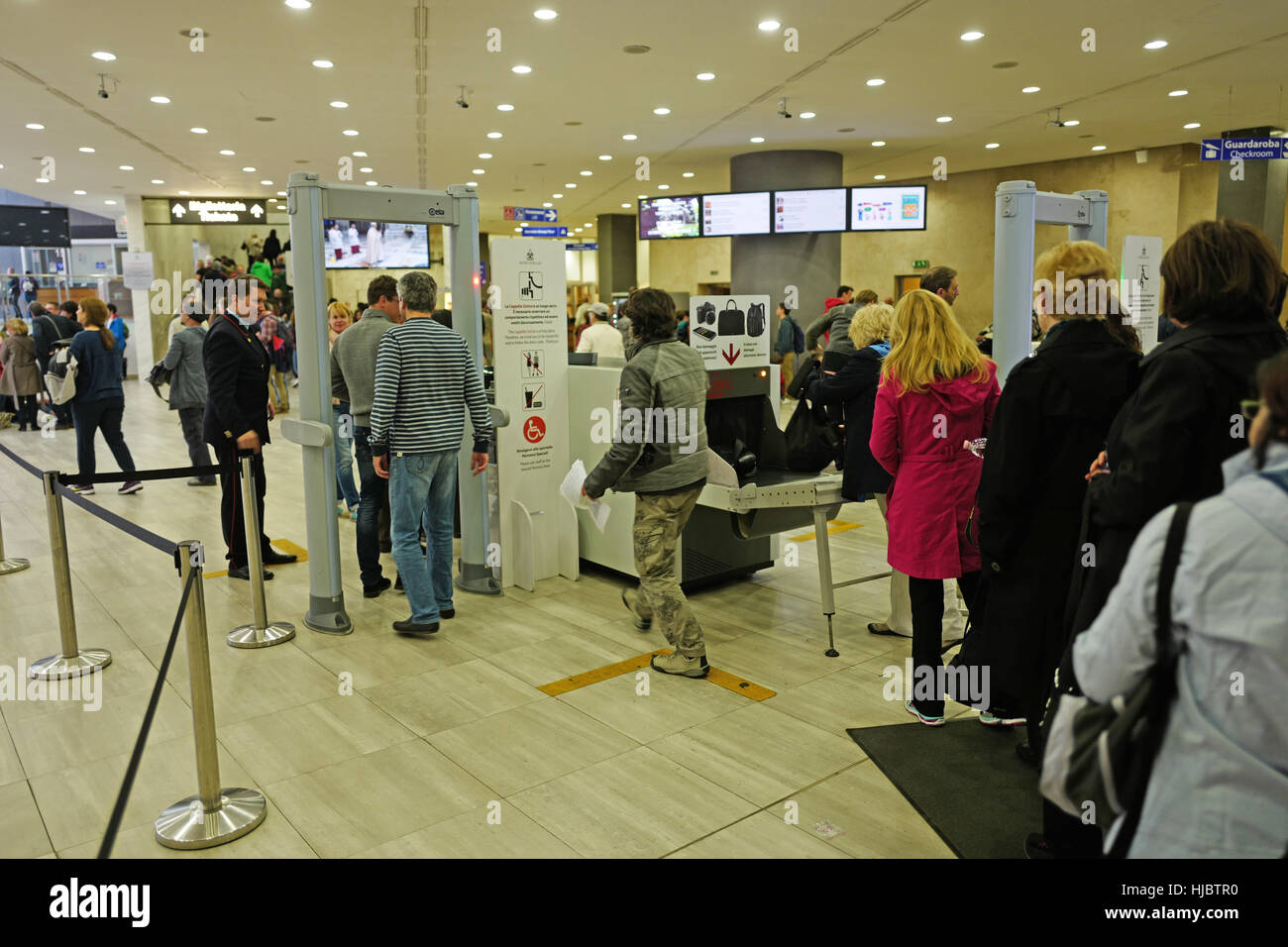
Pass metal detector and check any oversized bags before entering the galleries
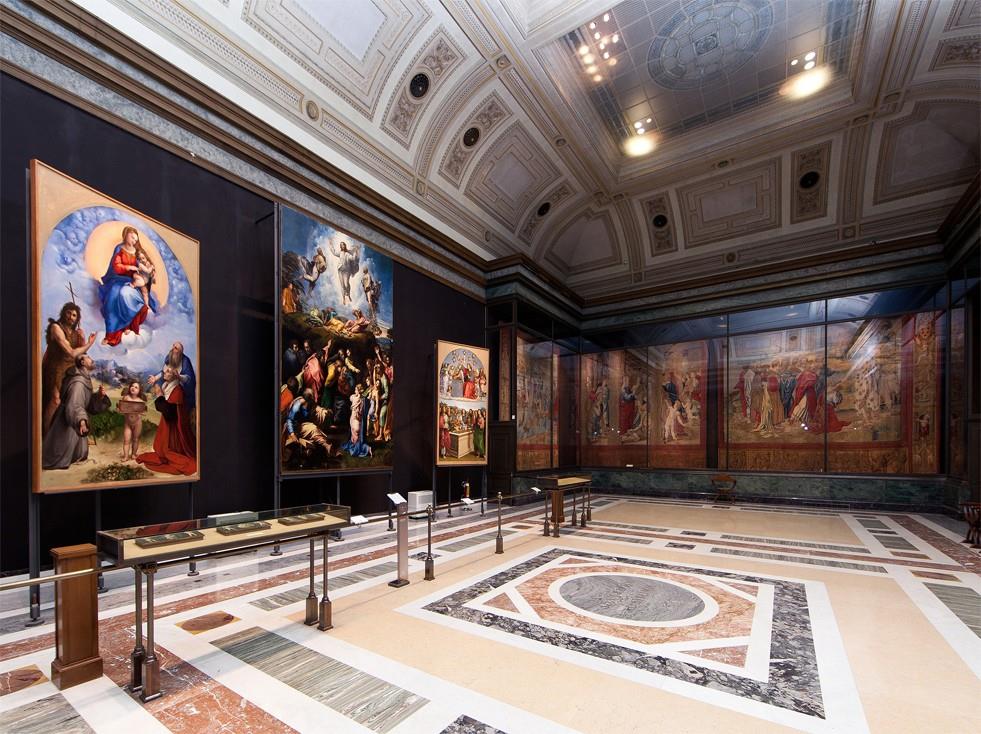
Walk through the picture gallery and early sculpture halls toward the main route
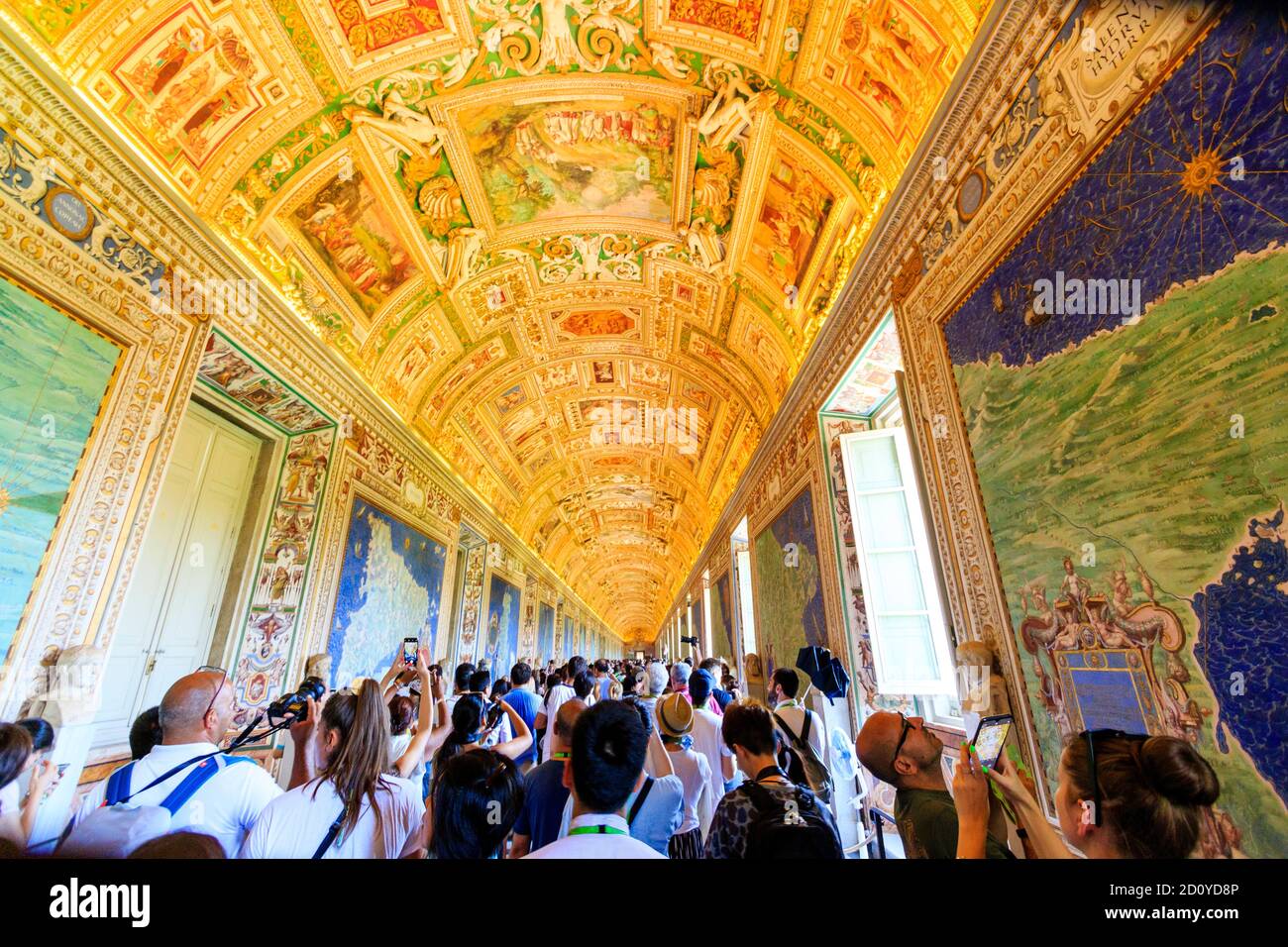
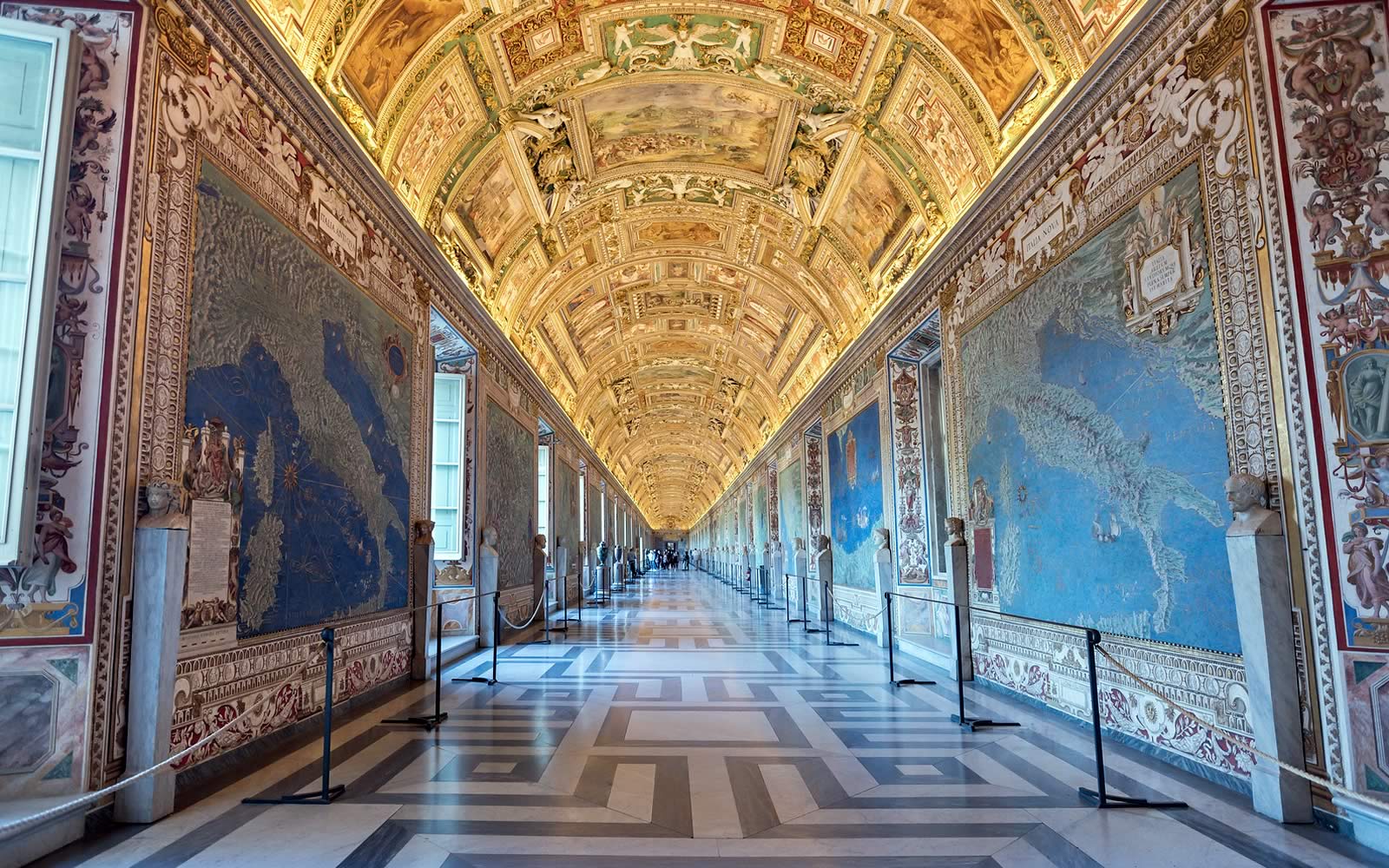
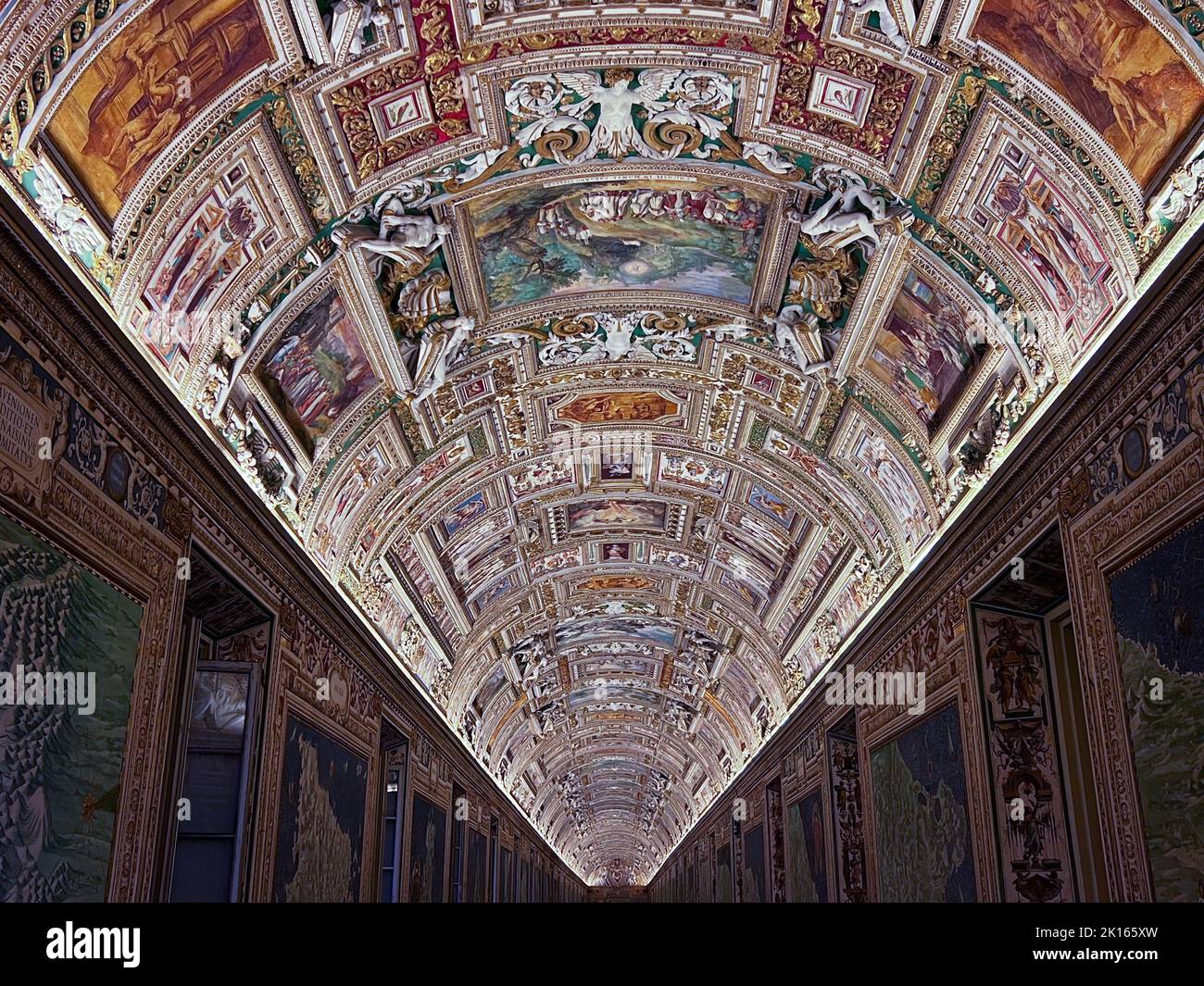
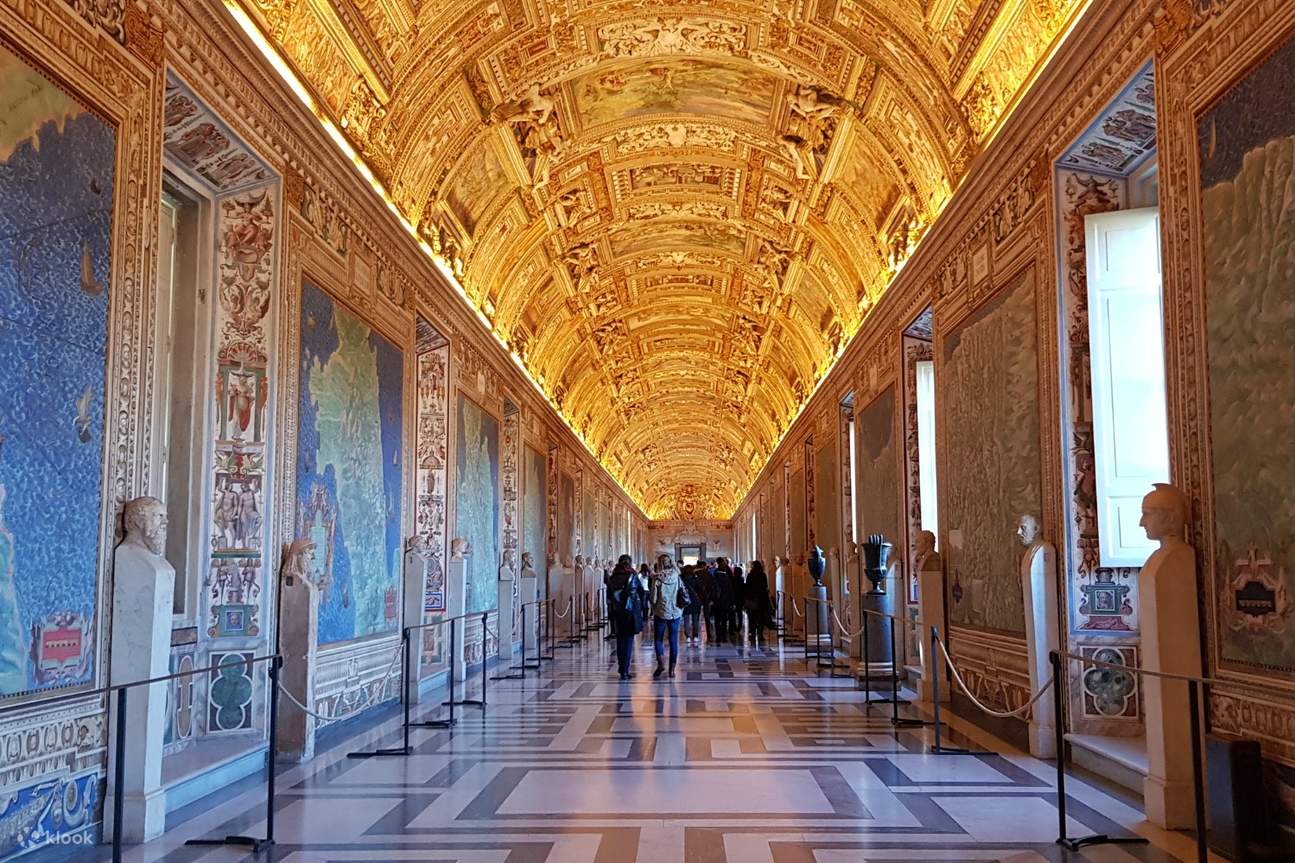
Follow the long corridor lined with 16th-century painted maps and woven tapestries
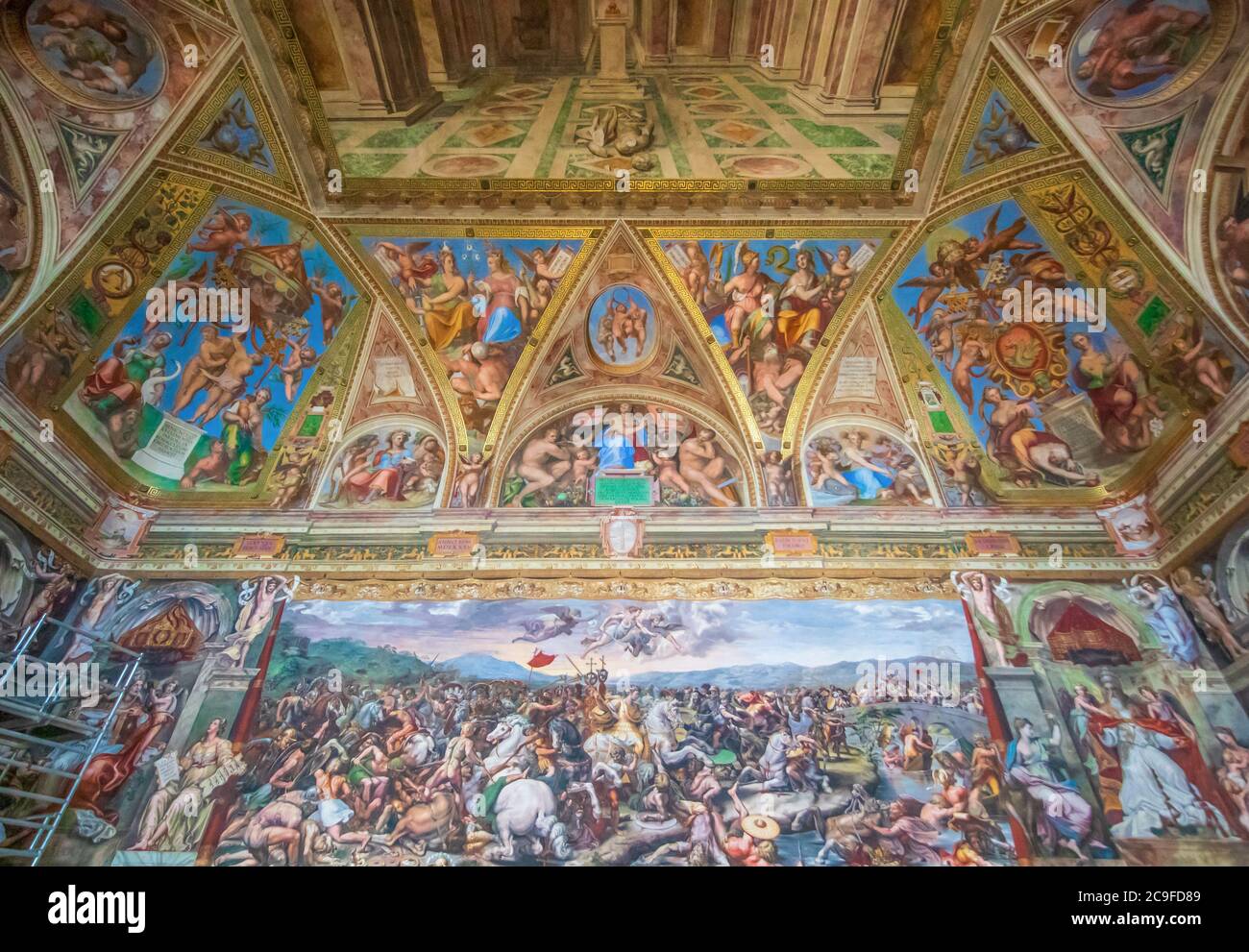
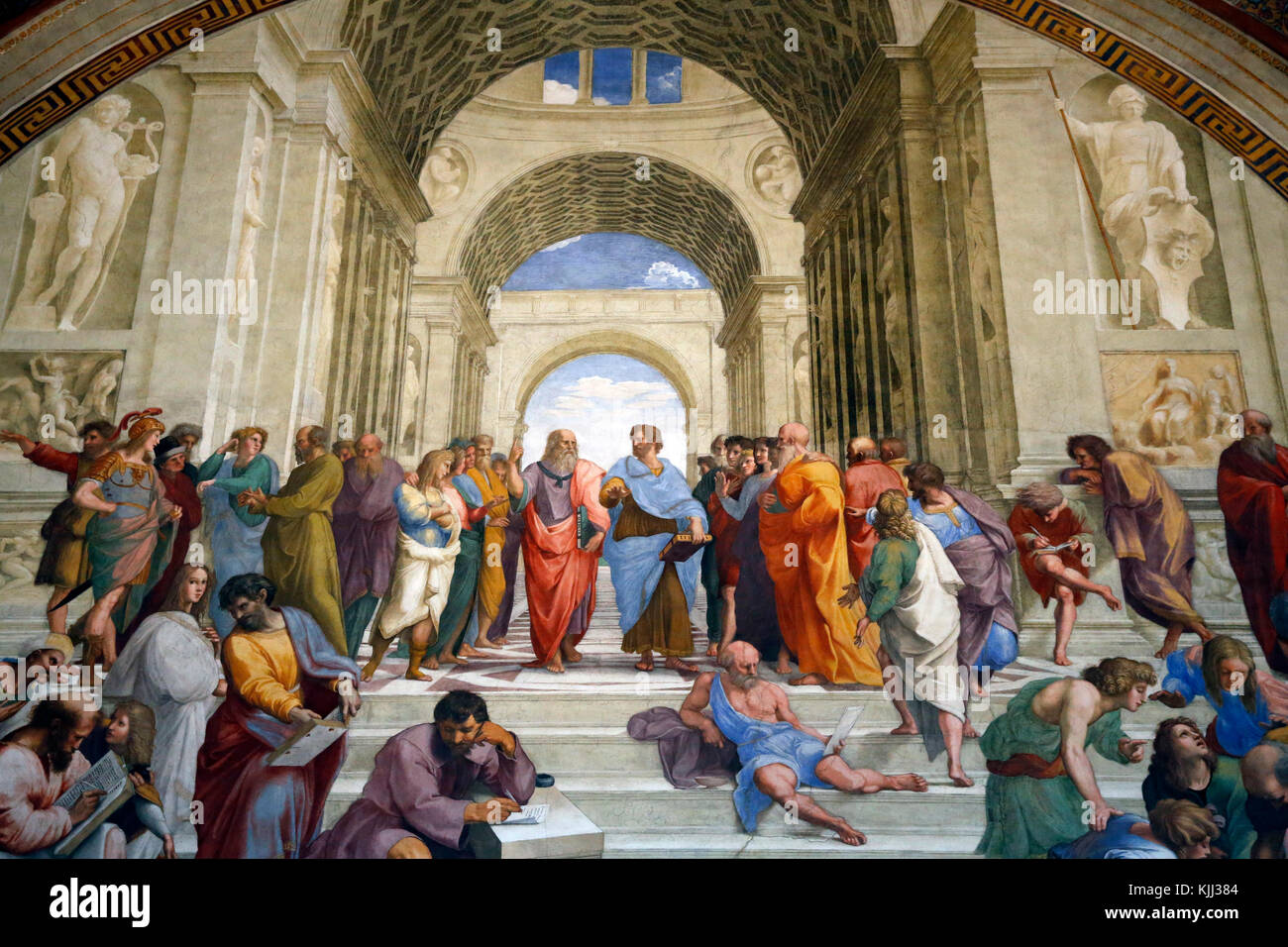
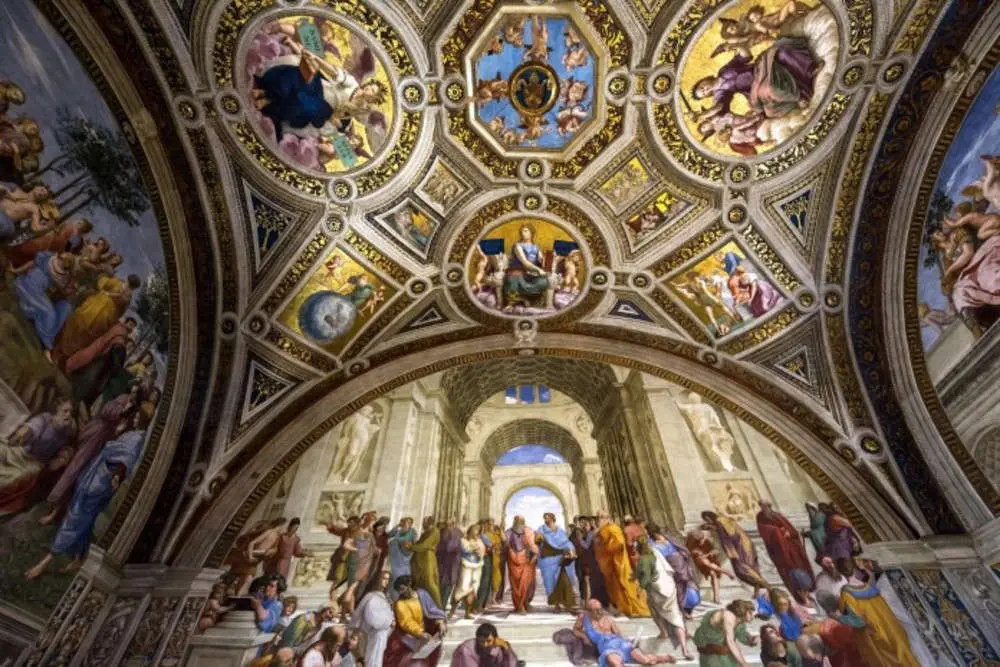
View the frescoed rooms including the School of Athens before descending toward the chapel
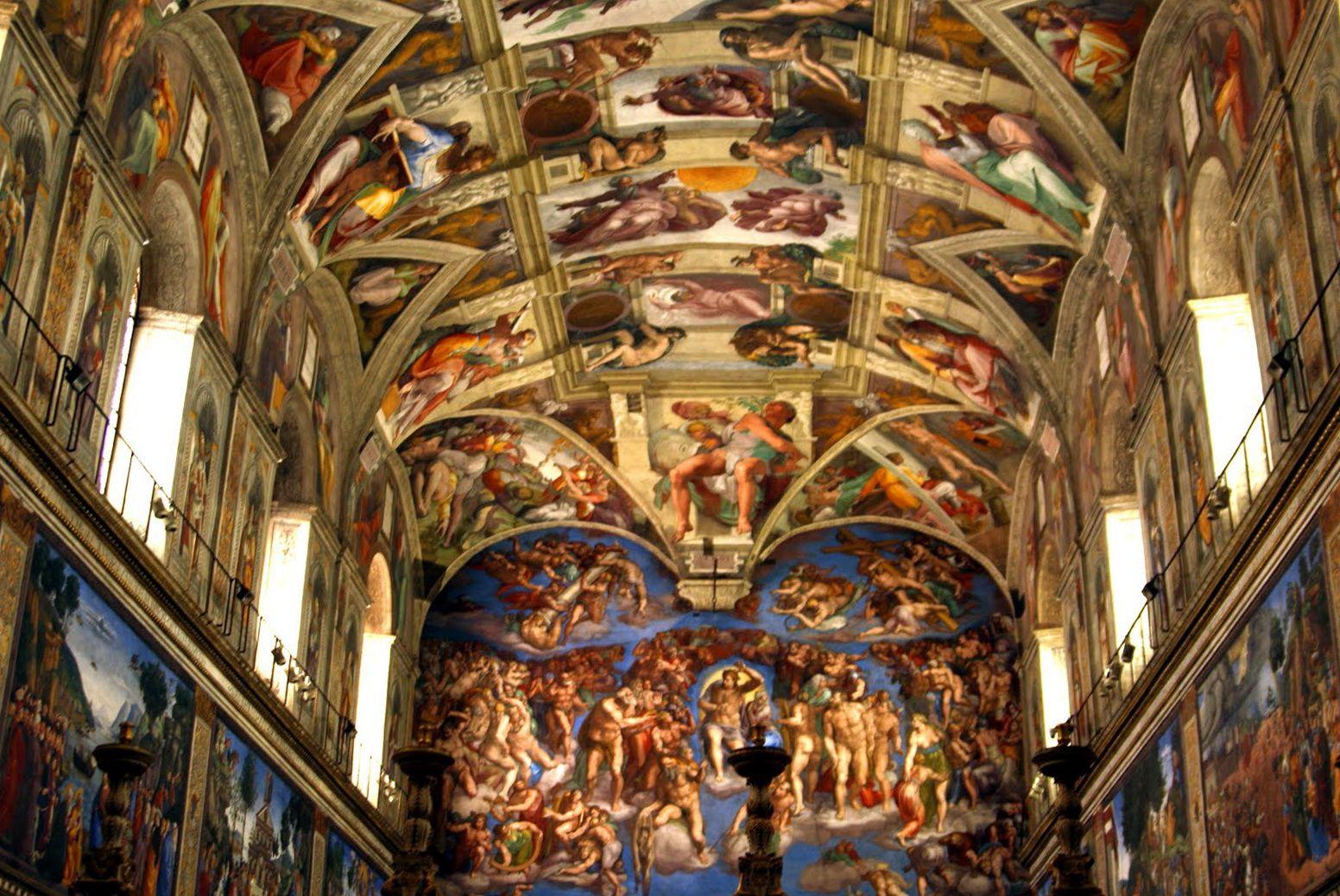
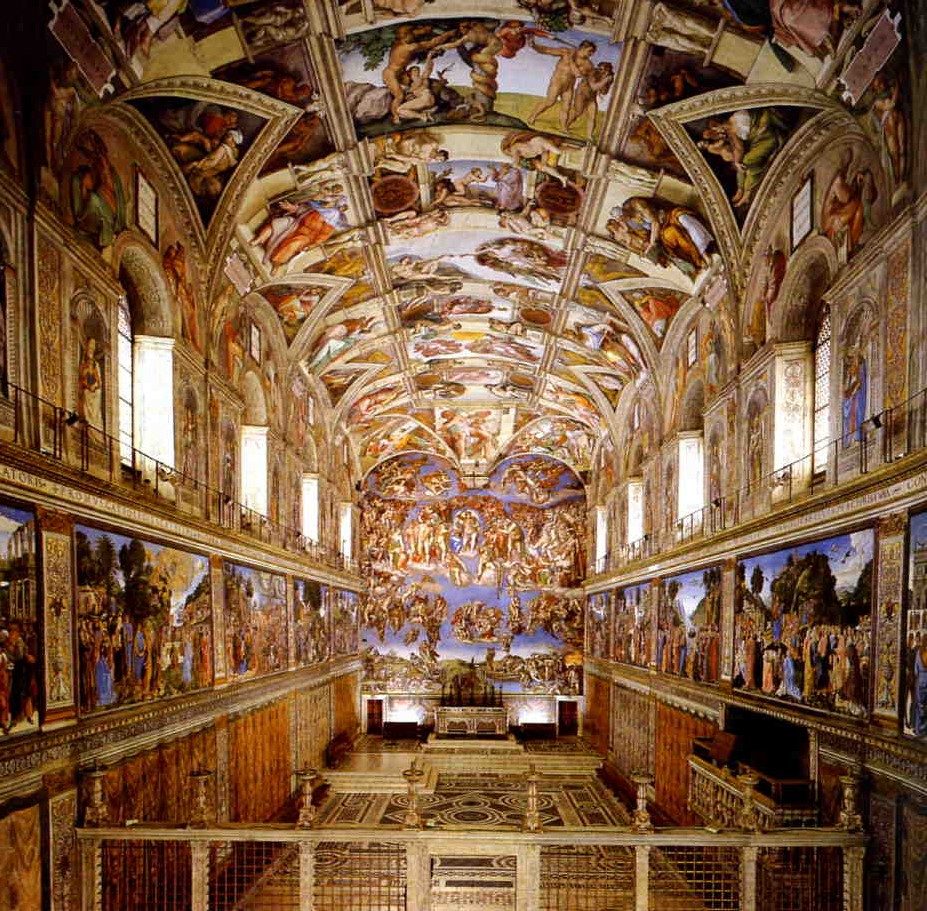
Take in Michelangelo's ceiling and the Last Judgment in silence, no photography
Use the shortcut staircase from the chapel directly into the basilica if continuing the visit
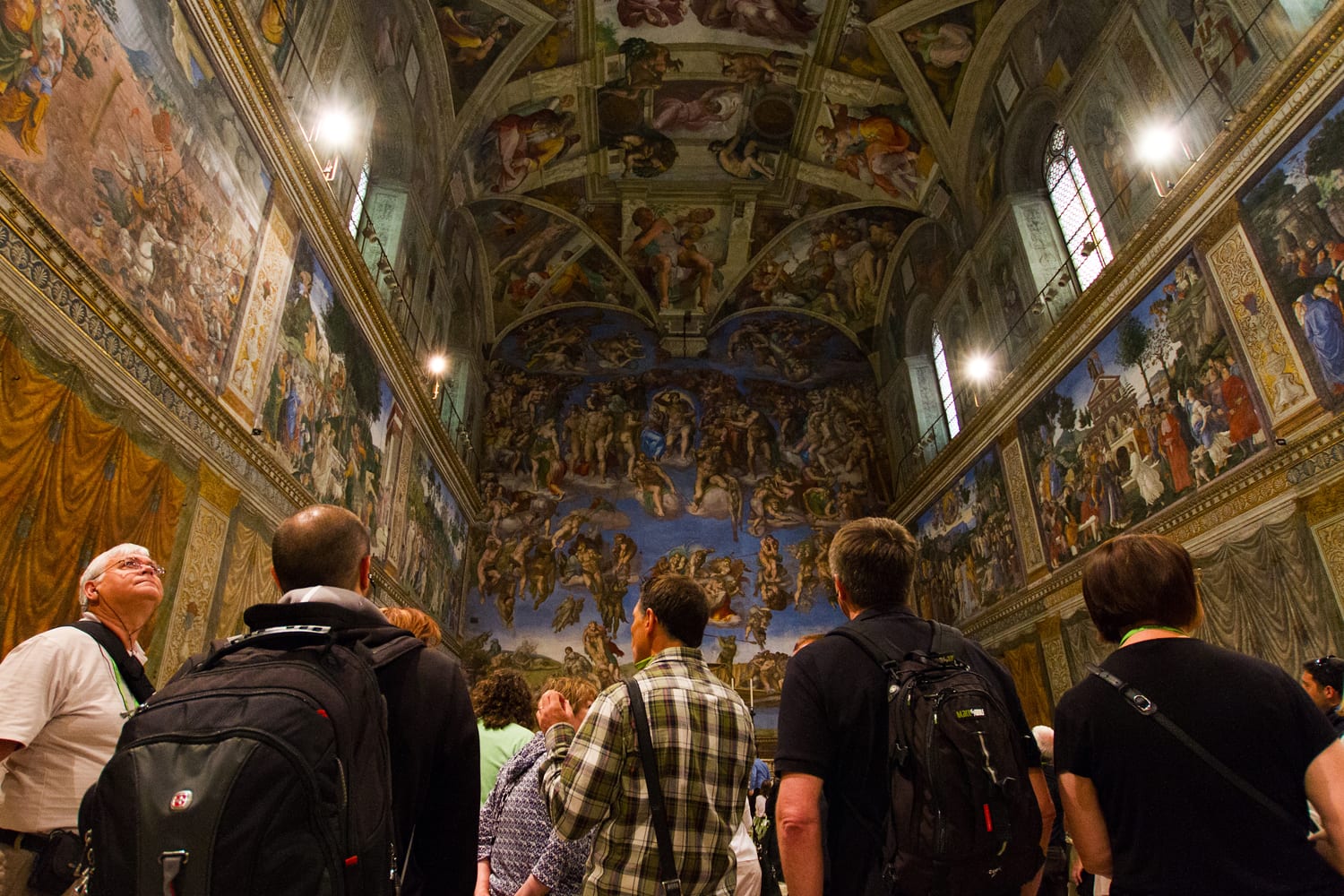
Michelangelo spent roughly four years painting the ceiling frescoes, completed in 1512, and later returned to add the Last Judgment on the altar wall between 1536 and 1541. Photography and filming are banned inside to preserve the pigments and the solemn atmosphere.
Four papal apartments decorated by Raphael and his workshop between 1508 and 1524 include the School of Athens, a fresco depicting more than 50 classical philosophers gathered in one architectural space.
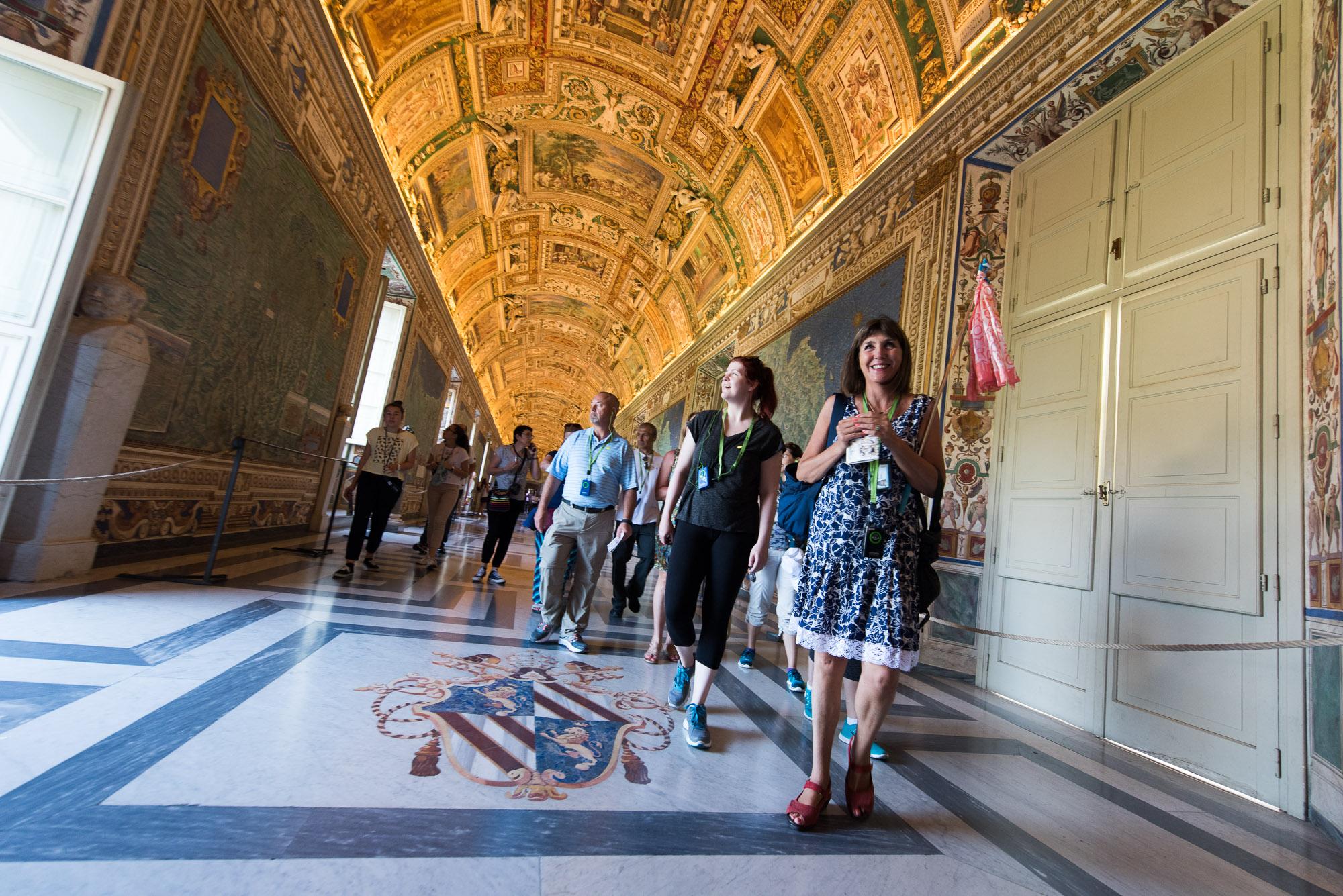
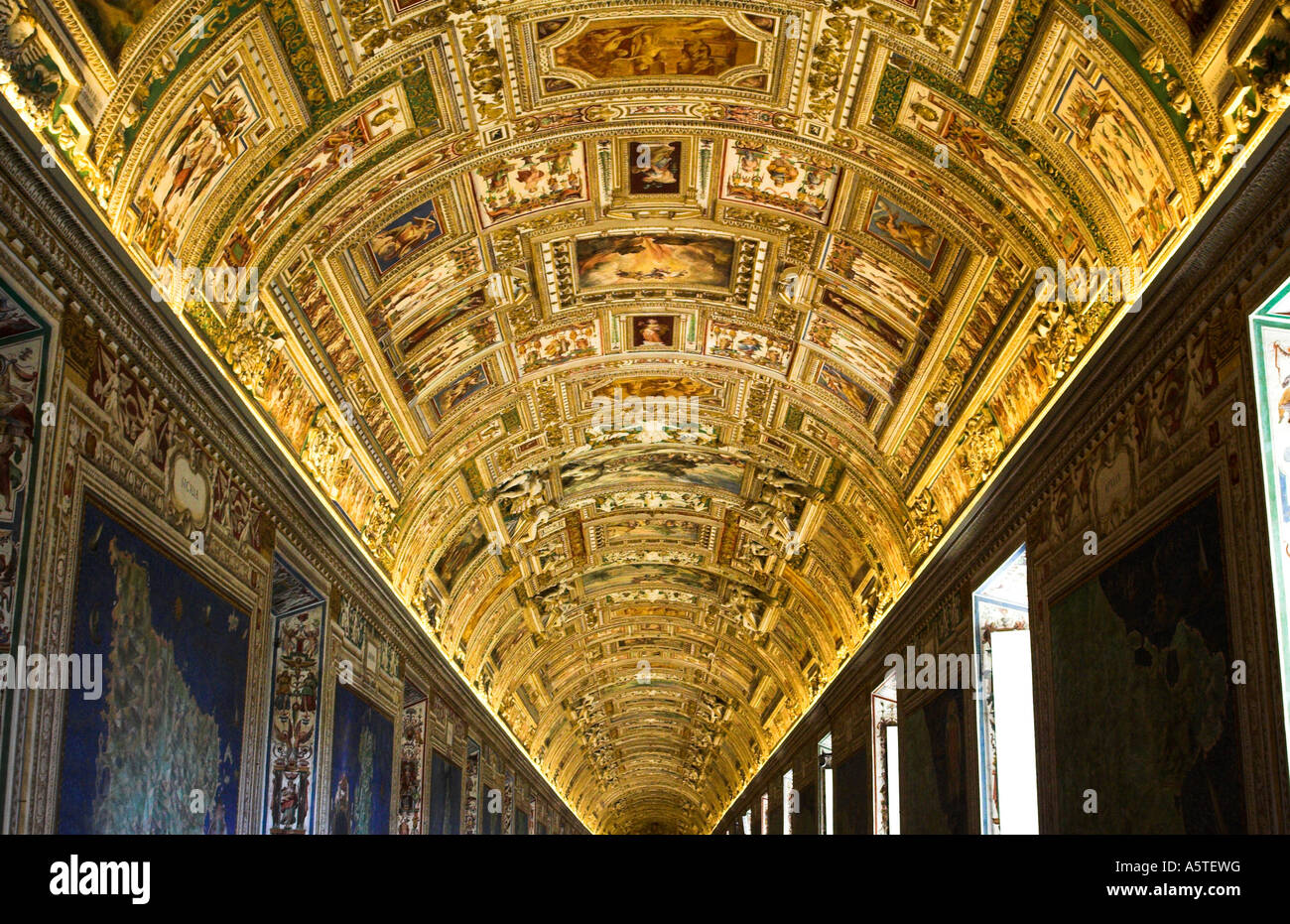
A 120-meter corridor lined with 40 topographical maps of Italian regions painted in the 1580s under Pope Gregory XIII, based on surveys by the geographer Ignazio Danti.
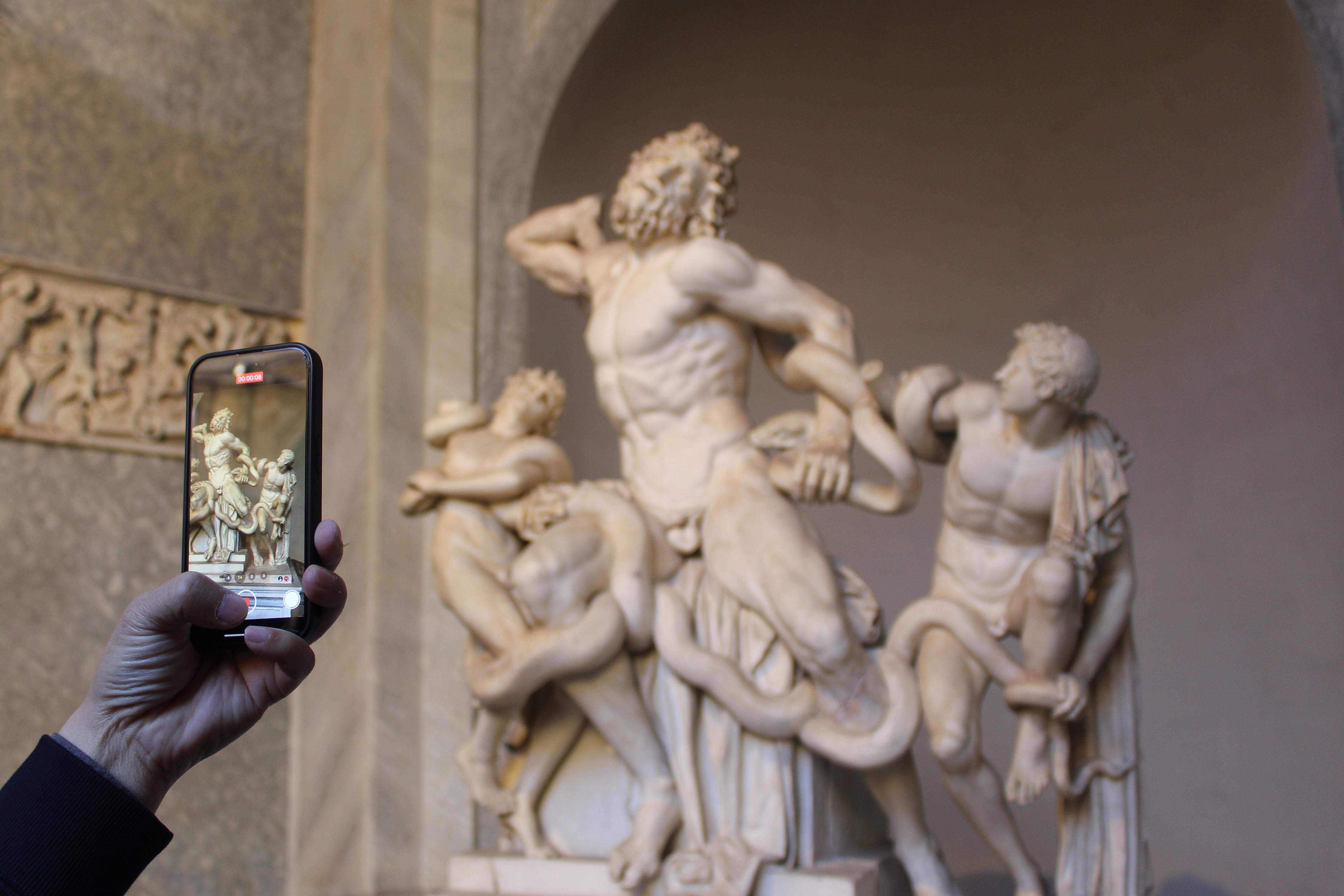
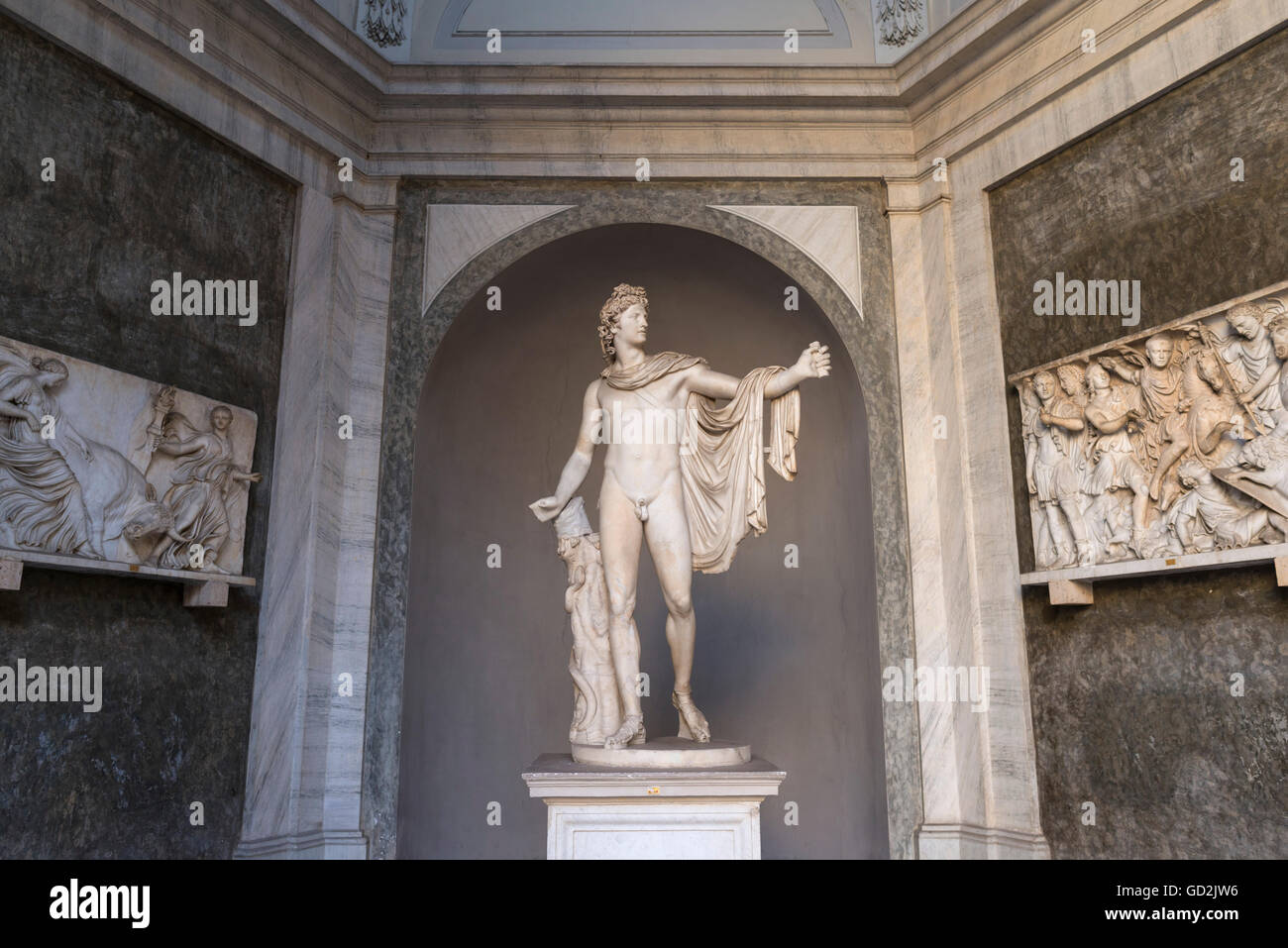
An octagonal courtyard within the Pio-Clementino Museum holding classical sculptures including the Laocoön group and the Apollo Belvedere, both rediscovered during the Renaissance.
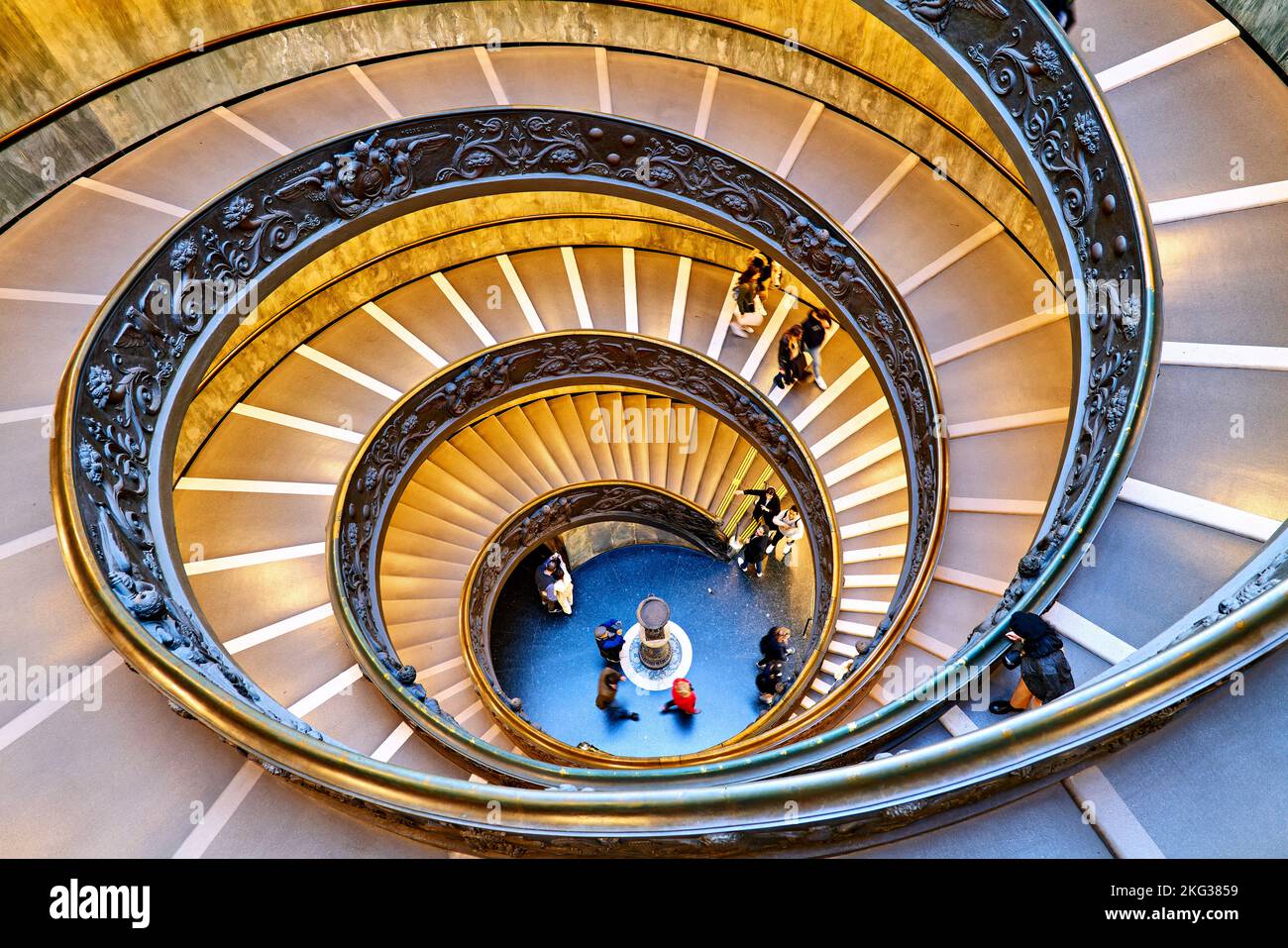
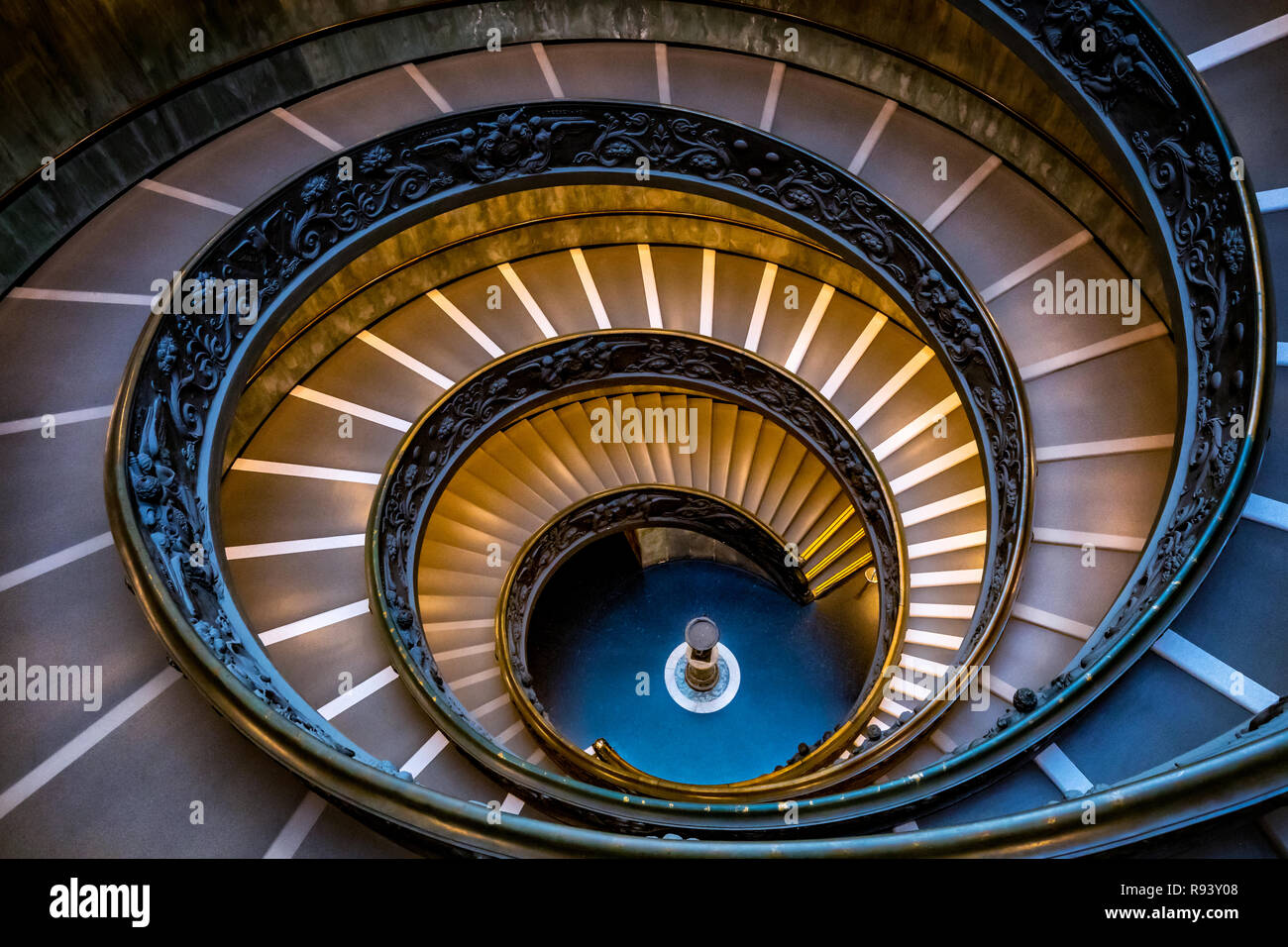
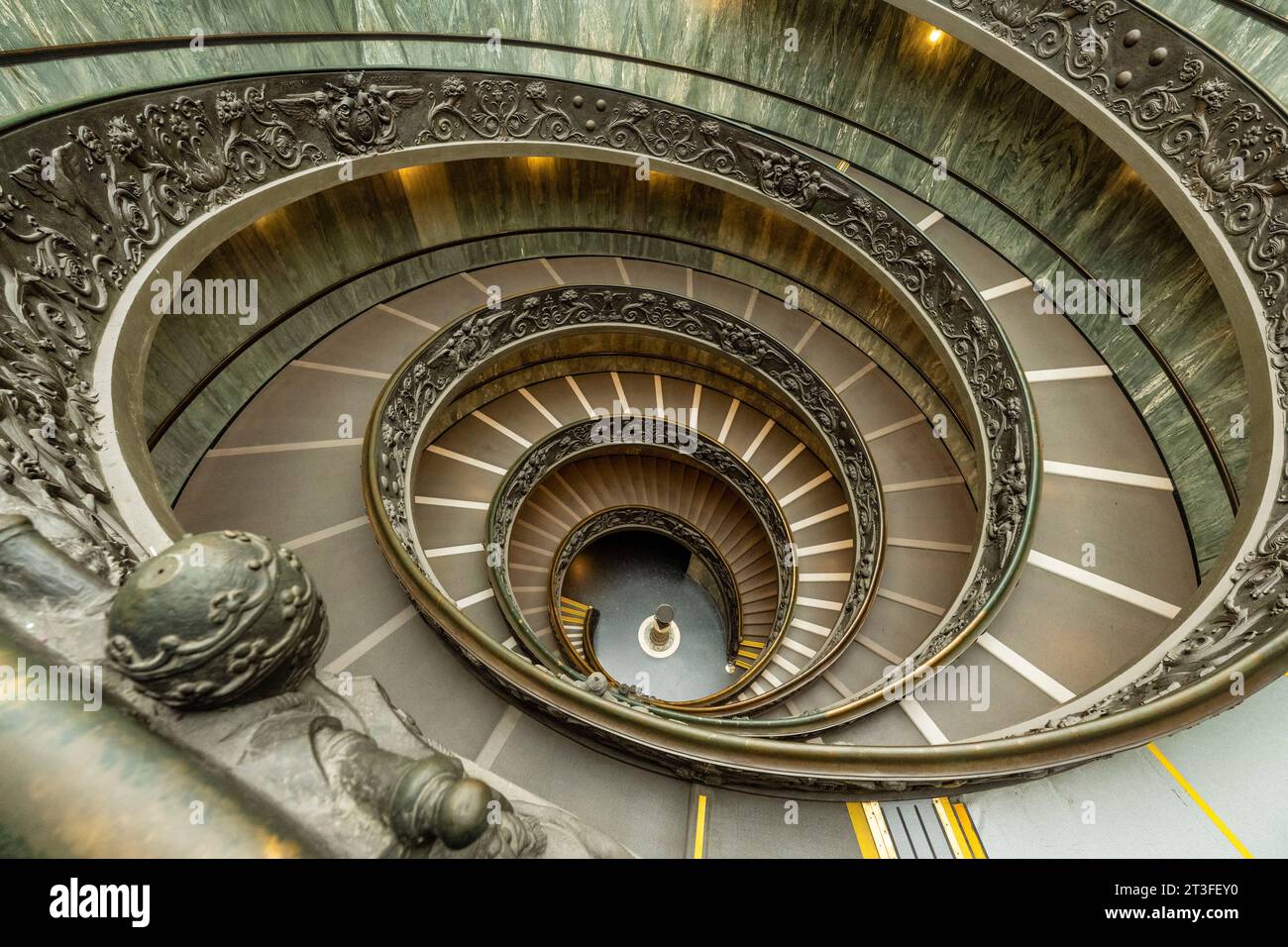
A double-helix spiral ramp designed in 1932 by architect Giuseppe Momo, inspired by an earlier Bramante staircase, allowing visitors to ascend and descend without crossing paths.
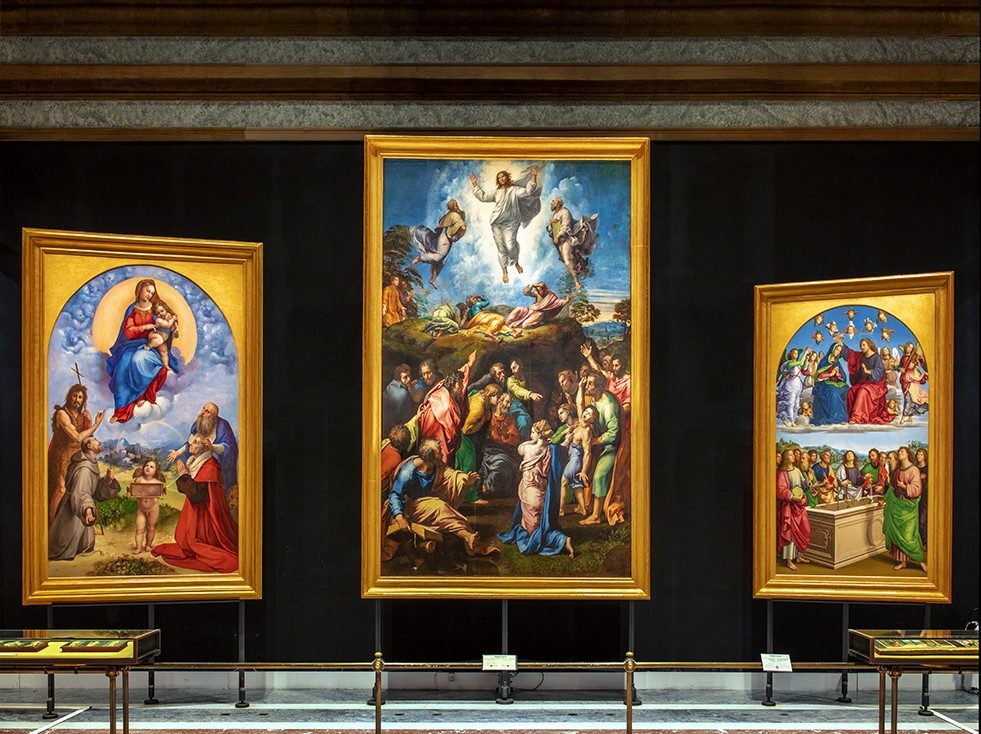
The Vatican's picture gallery holds around 460 paintings spanning the 11th to 19th centuries, including works by Caravaggio, Leonardo da Vinci and Giotto.
You reach Viale Vaticano while the light is still low and the queue is short, ideally between 08:00 and 10:00, before the coach groups arrive. You pass security, collect your voucher on your phone, and step into the atrium where the double-helix ramp begins its climb.
From there you follow the marked route, past the Pinecone Courtyard and its Roman bronze, into the Pio-Clementino galleries where the Laocoön still stands.
You move through the Egyptian rooms, then the long Gallery of Maps, forty painted panels drawing you forward while the ceiling glints gold above your head. You pause in the Raphael Rooms, where four frescoed chambers slow your pace. Then the corridor narrows and delivers you, without ceremony, into the Sistine Chapel.
Here you stop. Guards ask for silence; you tilt your head back and let your eyes travel the ceiling panel by panel. When you are ready, you take the exit door beside the altar, which drops you toward St. Peter's Basilica. Reserving your vatican tickets in advance is what buys you this unbroken rhythm rather than an hour on the pavement outside. You leave through Momo's spiral ramp, blinking, having walked several kilometres without once retracing your steps.
All the details about your upcoming adventure in one place
Vatican tickets open the door to the Vatican Museums, the Sistine Chapel ceiling by Michelangelo, and the Raphael Rooms, all within the walls of the world's smallest sovereign state. Skip-the-line Vatican access lets you move past the general entrance queue toward St. Peter's Basilica and the papal collections, while guided vatican tickets tours pair each hall with commentary on its frescoes and papal history. From the Gallery of Maps to the spiral Bramante Staircase, these Vatican City landmarks reward an unhurried walk through centuries of art.
The Vatican Museums began as a single marble statue. In 1506, Pope Julius II placed a newly unearthed Laocoön group in an octagonal courtyard, and around that one acquisition grew a collection now numbering roughly 70,000 works across some 54 galleries.
Successive popes added antiquities, tapestries, maps and modern religious art, until the route from entrance to exit stretched more than seven kilometres of connected rooms. Very few museums in the world can trace their origin to a single afternoon and a single sculpture.
The significance of the place rests less on scale than on concentration. Within these walls sit Raphael's frescoed Stanze, the Gallery of Maps with its forty topographical panels, the Etruscan and Egyptian collections, and Michelangelo's Sistine Chapel ceiling, painted between 1508 and 1512 while the artist worked on his back on scaffolding. Booking vatican tickets is, in practice, the price of standing beneath that ceiling. The Sistine Chapel remains a working liturgical space; it is here that the College of Cardinals gathers in conclave to elect a pope, sealed from the world beneath Michelangelo's Last Judgment.
Architecturally, the museums are a sequence of additions rather than a single design. Bramante's spiral ramp, later reinterpreted by Giuseppe Momo in 1932, coils visitors downward in a double helix of bronze and travertine. The Pinecone Courtyard takes its name from a colossal Roman bronze that once stood near the Pantheon. The Pio-Clementino wing frames classical marbles under coffered vaults, while the long map corridor channels crowds toward the chapel like a river toward a single mouth. Every ceiling seems to compete with the floor for attention.
Today the complex is among the most visited cultural sites on earth, drawing several million people each year to the edge of the world's smallest sovereign state. A skip-the-line Vatican route matters here precisely because the corridors are narrow and the demand is constant. Those researching vatican tickets tours quickly learn that the building rewards patience: the Raphael Rooms alone hold four chambers of fresco, and the ceiling of the Sistine Chapel repays a long, upward stare. Among Vatican City landmarks, the museums function as both gallery and pilgrimage, a place where art history and faith share the same walls. The collection is still growing, still curated, still very much alive four hundred years after that first statue was set down in the courtyard.

Very few museums in the world can trace their origin to a single afternoon and a single sculpture.
Vatican tickets grant entry only to visitors covering shoulders and knees, so sleeveless tops, shorts above the knee, miniskirts and hats are turned away at the security check. This dress code applies uniformly across the Vatican Museums, the Sistine Chapel and St. Peter's Basilica. Guards at the entrance visually inspect every visitor before the metal detector, so covering up beforehand avoids a return trip to a nearby shop for a scarf or wrap.
Every bag passes through a metal detector at the Viale Vaticano entrance, and anything larger than 40 x 35 x 15 cm must go into the free cloakroom rather than travel with you into the galleries. Small daypacks worn on the shoulders are fine as long as they don't extend more than 15 cm past the width of your body. Knives, scissors, metal tools, tripods, full-size umbrellas and walking sticks (other than mobility aids) are all held at the cloakroom for the duration of your visit.
Personal photography without flash or tripods is permitted throughout most galleries and the courtyards, but the Sistine Chapel enforces a strict no-photography, no-filming rule that guards actively police. Selfie sticks and professional camera rigs are confiscated at the door, so plan on handheld shots elsewhere in the complex.
Strollers are permitted throughout most of the route, and children move freely without a separate ticket requirement below a certain age set at booking. Restrooms and baby-change facilities sit along the main visitor path and near the cafeteria area.
Ottaviano-San Pietro metro station on Line A has elevators and tactile guidance leading toward the Vatican Museums entrance, though pavement between the station and the gate is somewhat uneven. Inside, the complex offers ramps, elevators to the Sistine Chapel level, and free wheelchair loan at the entrance hall on a first-come basis; some historic rooms with narrow passages or stairs remain harder to reach for larger mobility devices.
Outside food and drink cannot be carried into the galleries or the Sistine Chapel and must be left in the cloakroom or consumed before entry. Reusable water bottles are generally allowed through security, and a small number of refreshment points inside the complex sell packaged snacks and beverages.
Last entry 18:00
Quietest weekday morning
Busy, papal audience nearby
Extended evening slots some months
Heaviest crowds of the week
Last Sun of month free 9–14
Hours
Mon–Sat 08:00–20:00, last entry 18:00, closed Sunday
Address
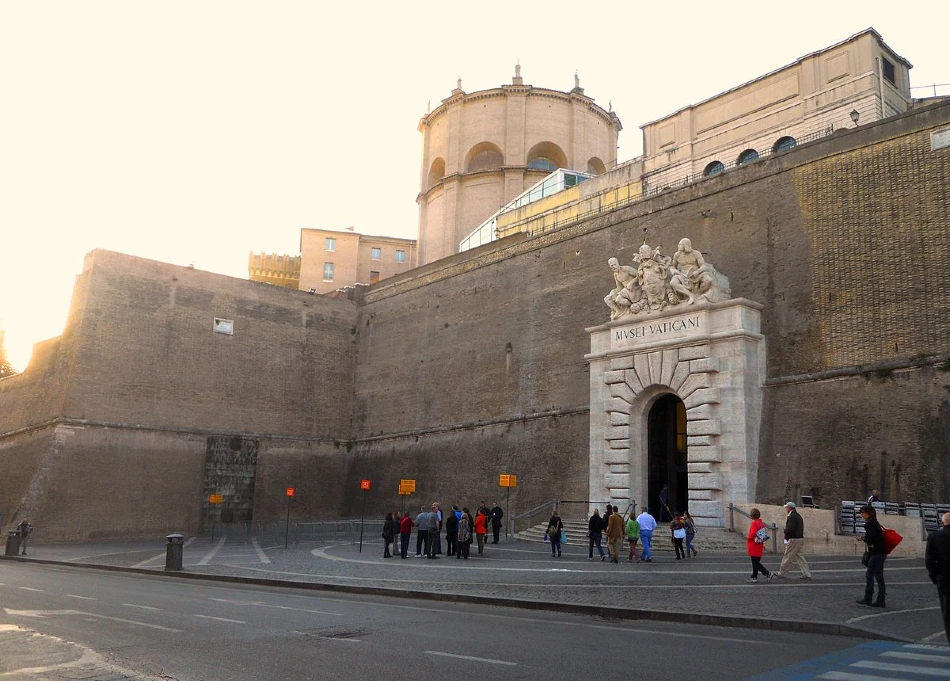
Viale Vaticano, 00165 Vatican City, Rome, Italy
Access
Elevators at main entrance, wheelchair loan at cloakroom, accessible route from Ottaviano metro
Best window
08:00–10:00, quietest before large tour groups arrive
Bag policy
Cloakroom free for items over 40x35x15 cm, no reservation needed
Public transport · 10-15 min from Ottaviano · Single metro fare around 1.50 EUR
Take Metro Line A toward Battistini and exit at Ottaviano-San Pietro, then walk roughly 10 minutes to the entrance on Viale Vaticano.
Walk · 20-30 min · Free
From Piazza Navona or Castel Sant'Angelo, follow Via della Conciliazione and Via di Porta Angelica toward Viale Vaticano.
Taxi · 10-20 min from city center · Metered, typically 10-15 EUR
Taxis can drop passengers at the taxi rank in the square facing the Vatican Museums entrance on Viale Vaticano.
Bus · 20-30 min · Standard ATAC fare around 1.50 EUR
Bus line 49 stops directly in the square in front of the Vatican Museums entrance; lines 32, 81 and 982 stop at Piazza del Risorgimento.
Standard adult tickets at 20 EUR gate price can be cancelled or refunded up to 24 hours before the scheduled entry slot for a full refund; no-shows and late cancellations are non-refundable.
Recommended time
3-4 hours
Budget 3 hours minimum for the main galleries and Sistine Chapel on a self-guided visit with vatican tickets, and closer to 4-5 hours if you add St. Peter's Basilica afterward. Arriving right at 08:00 opening lets you clear security fast and reach the Sistine Chapel before the mid-morning surge; arriving after 11:00 usually means queuing at the entrance itself. Crowds build steadily through the morning, ease briefly around lunch, then rebuild in the afternoon as day-trip groups and cruise groups pass through before the 18:00 last-entry cutoff. If you're short on time, a focused walkthrough of the highlights can be done in under 2 hours, but the galleries reward a slower pace.
Crowd levels through the day
Weather · crowds · average price — dots go green to amber to red as each metric rises.
Mild temperatures around 15-20°C draw heavy Easter-season crowds, especially in April. Early morning slots before 09:00 offer the best balance of weather and lighter lines.
Peak season with temperatures often exceeding 30°C and the heaviest daily attendance of the year. Some Friday evenings from May to October add extended hours with noticeably thinner crowds.
Warm days near 22-25°C persist into September before cooling, with tourist numbers gradually easing after the summer peak.
The quietest months overall aside from the Christmas week surge, with cool temperatures around 8-12°C and shorter queues at the security checkpoint.
Vatican tickets sell out on busy days, so reserving an entry time in advance avoids long queues at the Viale Vaticano gate.
The museums close on regular Sundays but open free from 9:00 to 14:00 on the last Sunday of most months, drawing large crowds despite no admission charge.
Anything larger must go to the free cloakroom, so packing light at the security checkpoint saves time.
Shoulders and knees must be covered throughout the complex, and a light layer avoids being turned away at the gate.
Between May and October, certain Friday evenings extend hours with noticeably thinner crowds than daytime visits.
Fixed dates like January 1, June 29 and December 25 close the museums entirely regardless of day of week.
Viale Vaticano, 00165 Vatican City
Gate where individual and group tickets scan in, near the spiral exit staircase
Get directions
Piazza del Risorgimento, Rome
Common gathering point for guided tours a short walk from the entrance
Get directionsThe story of vatican tickets begins in January 1506. A statue of Laocoön and his sons surfaced in a Roman vineyard near Santa Maria Maggiore. Pope Julius II bought it within weeks. He placed it in the Cortile del Belvedere, laid out by Donato Bramante. That courtyard became the seed of the papal collection. From a single marble group grew one of the largest museum complexes on earth. Julius II shaped more than sculpture. In 1508 he commissioned Michelangelo to paint the Sistine Chapel ceiling. The artist worked on scaffolding for four years, finishing in 1512. He returned decades later, painting The Last Judgment on the altar wall between 1536 and 1541. In the same period Julius set Raphael to fresco his private apartments. The Raphael Rooms, including the School of Athens in the Stanza della Segnatura, occupied the painter from 1508 until his death in 1520. These commissions define the modern Vatican Museums tour. Expansion followed across five centuries. Clement XIV and Pius VI founded the Museo Pio-Clementino in the 1770s. Pius VII added the Chiaramonti gallery early in the 1800s. Gregory XVI opened Egyptian and Etruscan sections in 1839. The collection weathered near-disaster: Napoleon seized masterpieces after 1797, and the Laocoön travelled to Paris until the 1815 Treaty of Paris returned it. A spiral ramp designed by Giuseppe Momo, installed in 1932, still carries visitors out today, one of the enduring features any Rome landmarks itinerary encounters. Modern vatican tickets tours trace this same accreted geography. What survives is layered time. The Belvedere torso that influenced Michelangelo still stands. Momo's double helix still turns. Guided vatican tickets tour groups move past Bramante's courtyard, Raphael's frescoes, and Michelangelo's restored ceiling, cleaned between 1980 and 1994. Booking vatican tickets tickets grants entry to this continuous chronicle of papal patronage, a Roma musei Vaticani legacy shaped by ambition and preservation alike.
A statue of Laocoön was unearthed near Rome and bought by Pope Julius II, seeding the collection.
Julius II commissioned Michelangelo's Sistine ceiling and Raphael's frescoed apartments.
Michelangelo completed the Sistine Chapel ceiling after four years of work.
Michelangelo painted The Last Judgment on the chapel's altar wall.
Clement XIV and Pius VI founded the Museo Pio-Clementino.
The Treaty of Paris returned the Laocoön after Napoleon's earlier seizure.
Gregory XVI opened dedicated Egyptian and Etruscan galleries.
Giuseppe Momo's spiral ramp was installed and still serves visitors today.
The double-helix exit ramp, built by Giuseppe Momo in 1932, is shot from the upper landing looking straight down into the coiled ironwork, or from mid-ramp to catch the symmetry of the two intertwined paths. It sits at the very end of the museum route, so most people booking vatican tickets only see it on the way out.
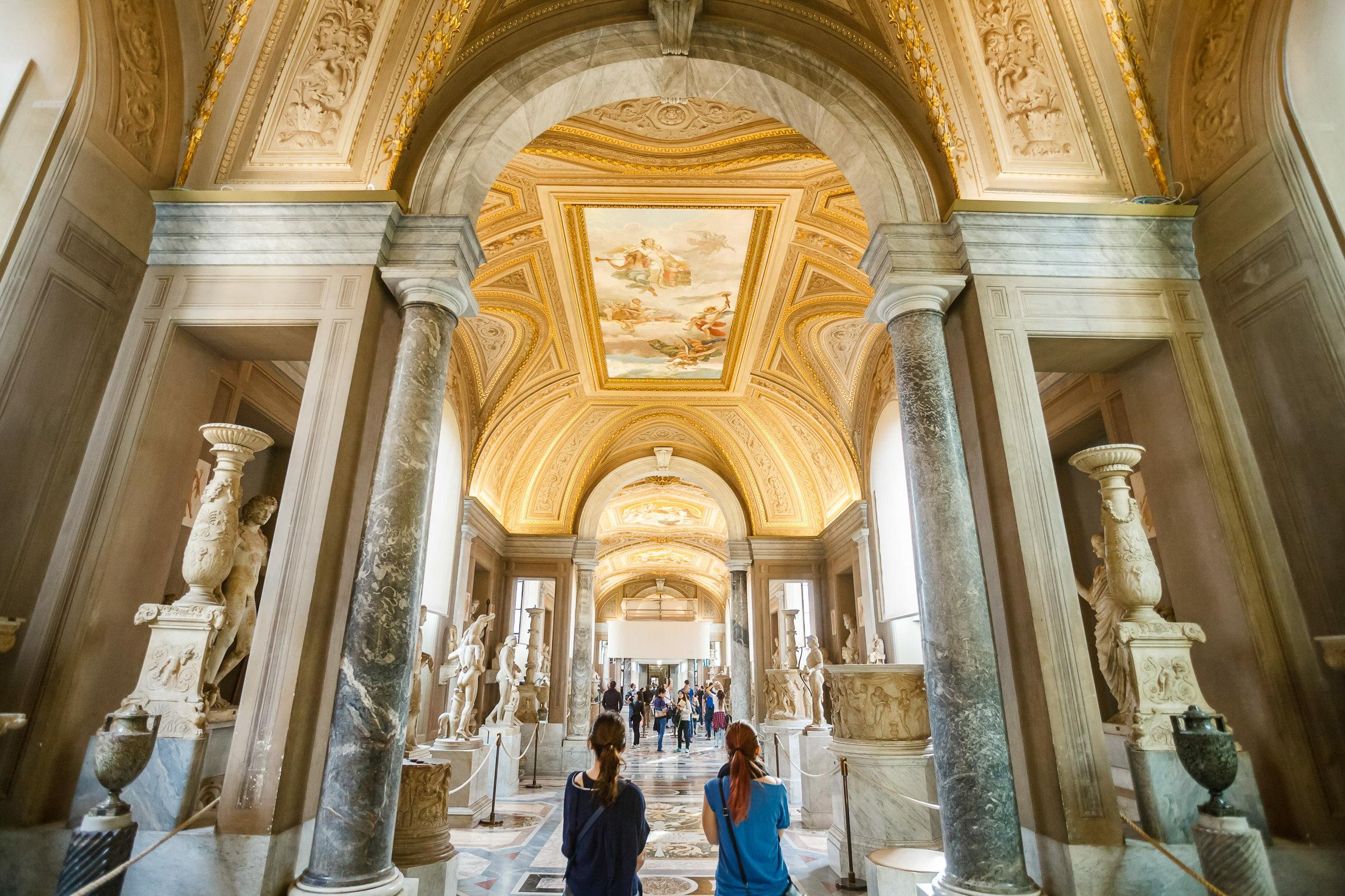
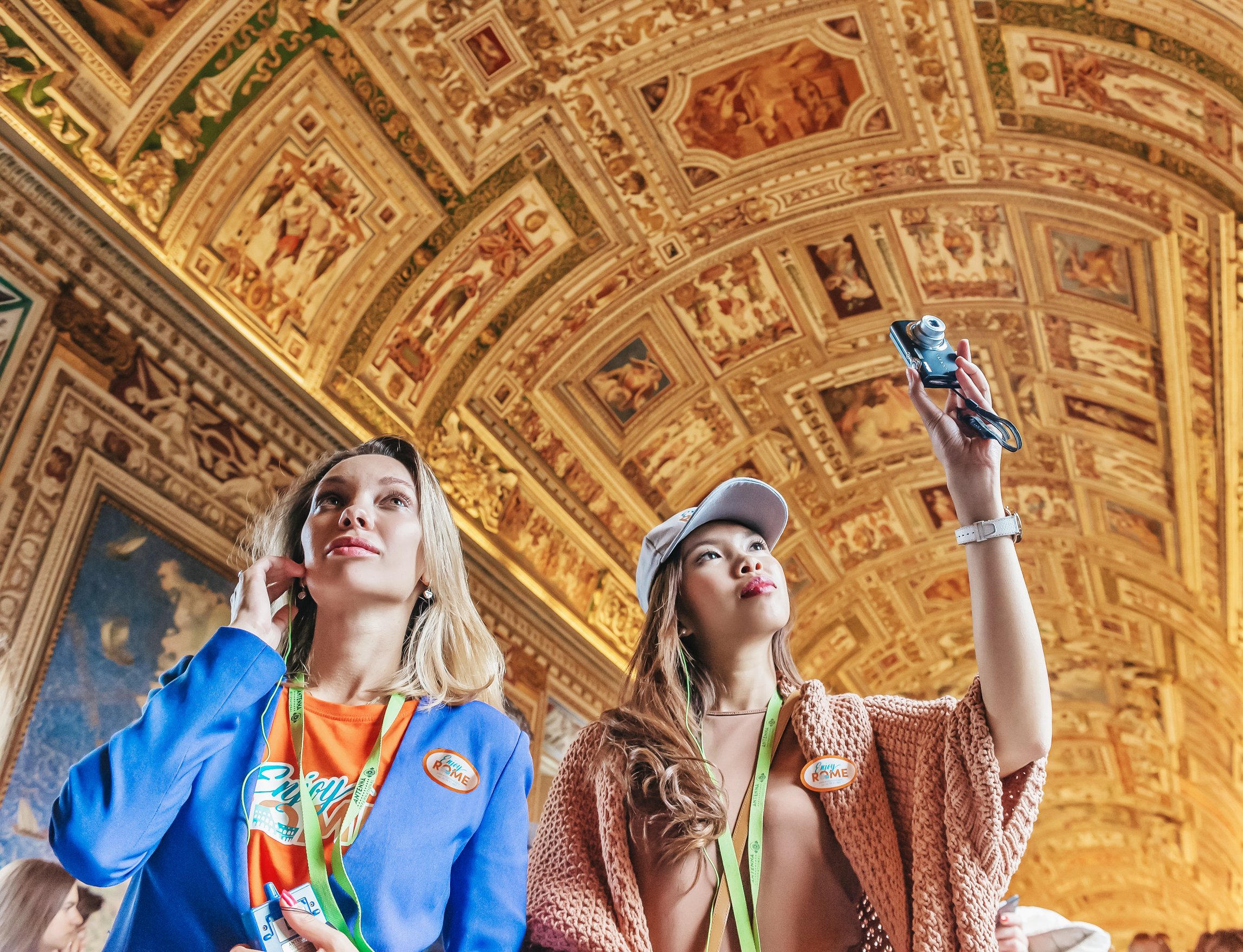
This 120-meter frescoed corridor, lined with 40 topographical maps of Italian regions, is best photographed straight down the central axis to capture the gilded barrel-vaulted ceiling and the receding perspective of arches. Standing near the entrance gives the cleanest symmetrical line down the hall.
The Stanza della Segnatura, home to The School of Athens, is photographed from the doorway opposite the fresco to fit the full architectural scene and crowd of painted philosophers in frame. Space is tight, so a wide-angle lens or phone held at chest height works better than trying to back up further.
Named for the giant bronze pinecone sculpture at its far end, this open courtyard is shot from ground level looking toward the pinecone with Bramante's niche as a backdrop, or from the surrounding gallery windows above for an overhead angle. It's one of the few outdoor, naturally lit spots along the route.
No photography of any kind is permitted inside the chapel, so visitors typically photograph the approach corridor or step outside afterward rather than the ceiling itself. It remains one of the most searched names tied to any Vatican museums tour despite the ban.
Vatican tickets get families through the door quickly, since strollers and buggies often skip ahead of the main line, but the museum's long one-way route can wear kids out fast. The trick is prioritizing a handful of rooms rather than trying to see everything before the Sistine Chapel.
Pick two or three highlights before you go — the Gallery of Maps and the Sistine Chapel are the realistic ceiling for most young children in a single visit. Trying to cover every room between the 08:00–20:00 opening hours and last entry at 18:00 usually backfires with tired toddlers.
A long spiral ramp near the entrance covers two floors and works well with a stroller, but a few short flights between half-levels have no ramp or lift. Be ready to lift the stroller briefly rather than plan an all-wheels route.
The corridor stretch before the Chapel is the longest unbroken walk of the vatican tickets tour, so build in a pause at the Gallery of Maps beforehand. Snacks and a short seated break here help kids arrive calmer rather than restless.
Silence and no photography are strictly enforced inside, so talk kids through this rule before you reach it rather than at the door. Bench seating along the walls lets younger children rest and look up without needing to stand in the crowd.
Restrooms with baby-changing stations appear at several points along the visitor path, not just at the entrance, so there is no need to backtrack. This matters most for families booking early vatican tickets tickets for the quieter 08:00–10:00 arrival window, when younger kids still need frequent stops.
Booking vatican tickets covers museum entry only, so meals are a separate call — you can eat inside before or after your Sistine Chapel visit, or step out onto Viale Vaticano for the Prati neighborhood's cafés and trattorias.
One floor below the Atrium of the Four Gates, this canteen-style stop serves pasta, roasted meats, pizza slices and fruit. It's useful for a fast, seated break mid-visit but gets a crowded lunchtime rush around 12:30-14:00, so an early or late sitting works best for a quick vatican tickets tour.
Attached to the self-service corner, this bar handles espresso, sandwiches, pastries and cold drinks for anyone wanting a five-minute stand-up break rather than a full sit-down meal.
Set near the Sphere Within a Sphere sculpture, this open-air option offers salads, light plates and aperitivo-style drinks, a calmer pick than the cafeteria for those on a self-guided skip-the-line Vatican Museums tour.
A Prati favorite on Via Properzio serving Tuscan-leaning plates like pasta e fagioli and cured meat boards; good for an unhurried dinner once the Rome Vatican landmarks tour of the day is done.
Open since 1919 on Via Fabio Massimo, known for espresso with melted chocolate and homemade pastries, a solid pre-opening coffee stop before the 08:00 gate rush.
Real experiences from real travelers
We arrived just as the doors opened and the Gallery of Maps was almost quiet, the gilded ceiling glowing under the morning light. Booking vatican tickets ahead meant we walked past a line that already stretched down the block. The Sistine Chapel was packed by the time we reached it, so go early
Standing under Michelangelo's ceiling after years of seeing it in books left me quiet for a while. Our guide moved us efficiently through the Raphael Rooms before the crowds thickened. The skip-the-line vatican museums access saved us at least ninety minutes in the July heat
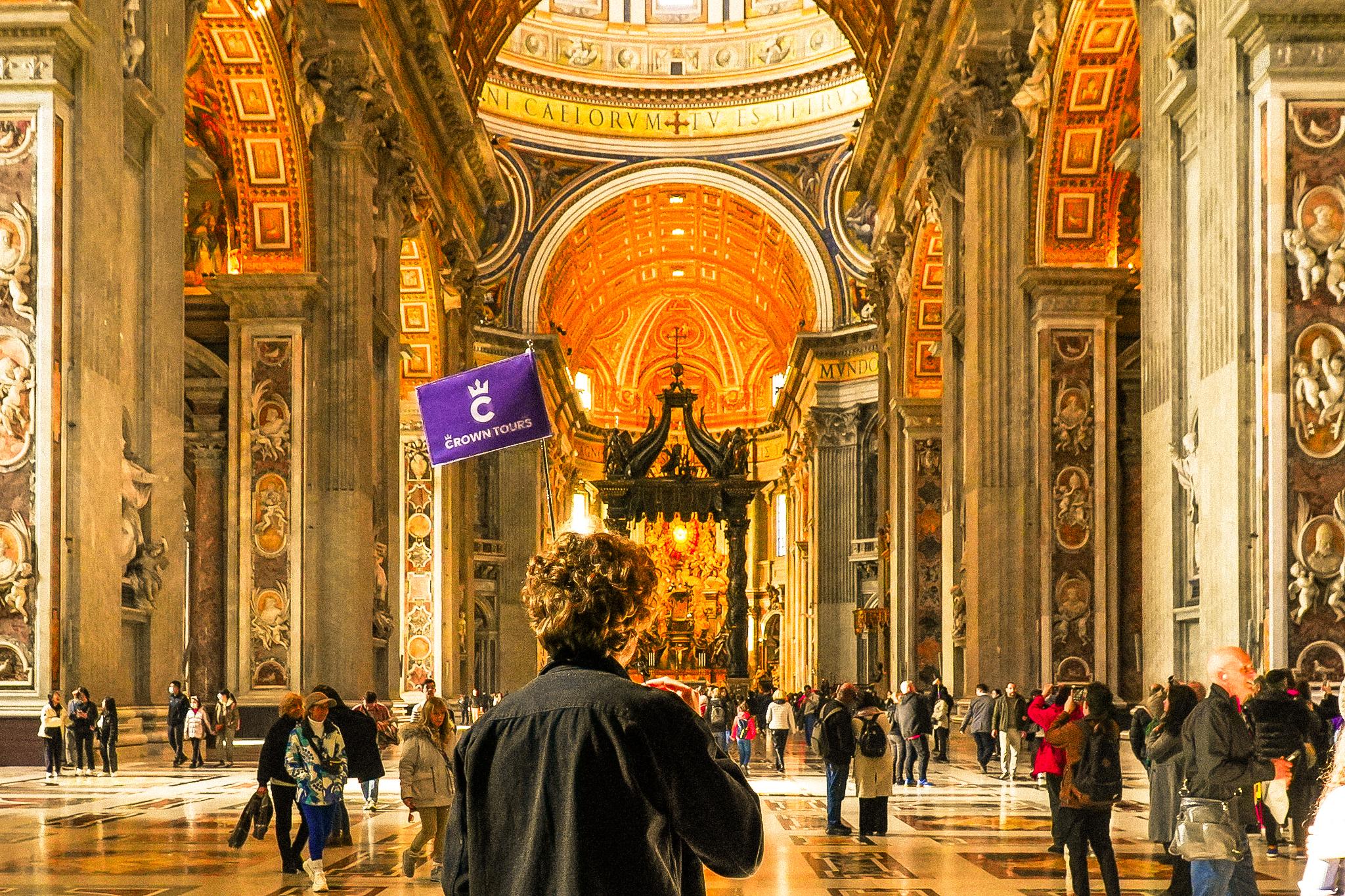
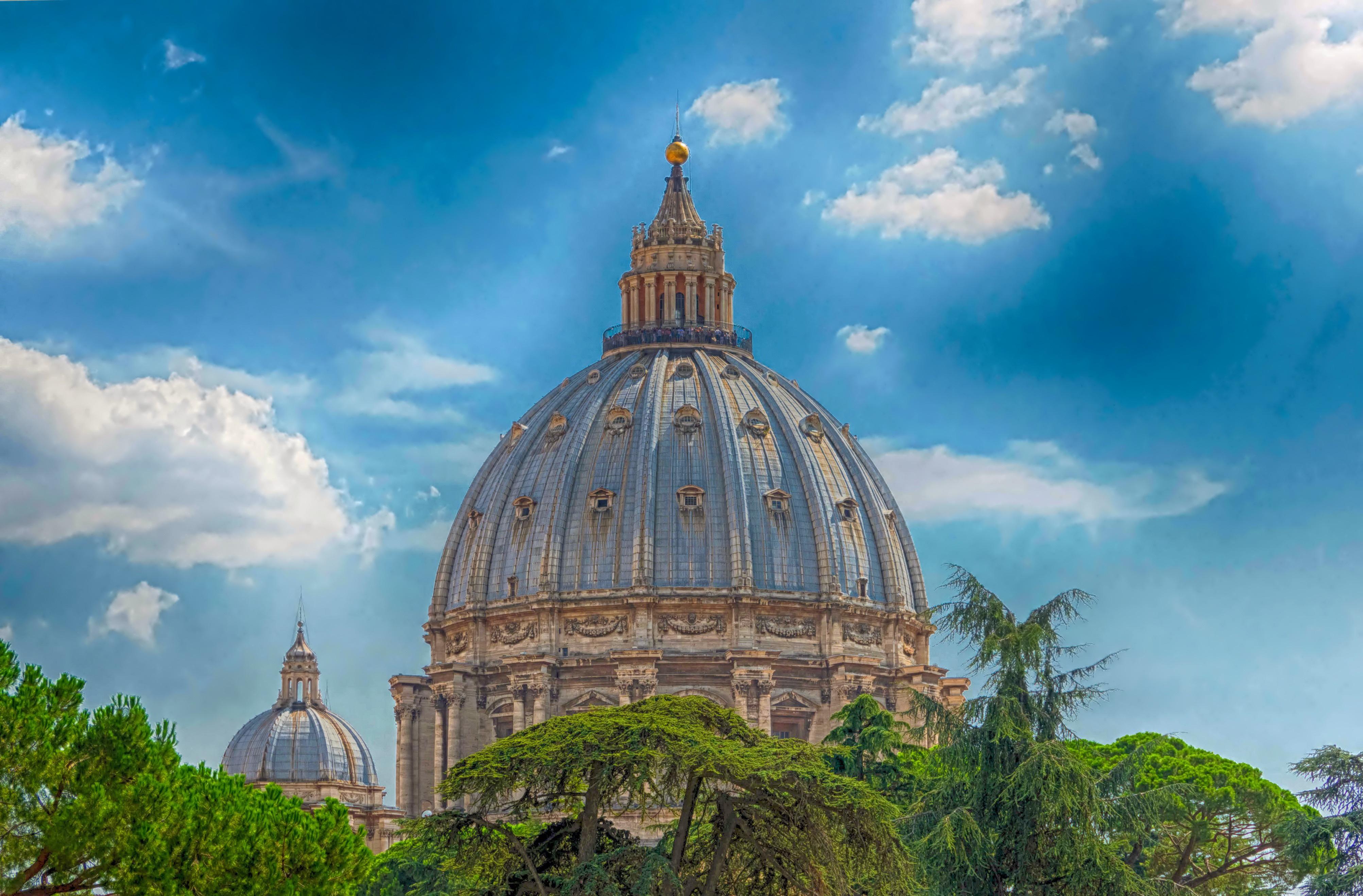
The scale of St. Peter's Basilica is hard to describe, the baldachin under the dome towers over everything. Afternoon crowds were heavy and the corridors got warm. Still glad we climbed to the cupola for the view over the colonnade
Prenotare i biglietti musei vaticani online è stato semplice e ci ha risparmiato la fila lunghissima all'ingresso. La Cappella Sistina resta il cuore di tutto, ma anche la scala del Bramante merita una foto. Consiglio la mattina presto
The vatican tickets tour we joined was small enough that we could actually hear the guide over the crowd. She pointed out details in the Raphael Rooms I would have walked straight past. The whole Vatican complex feels endless in the best way
The Pinecone Courtyard and the modern sphere sculpture surprised me before we even reached the galleries. It rained lightly that morning which thinned the crowds a little. Having our vatican tickets tours confirmation on the phone made the entrance painless
Subir até a cúpula da Basílica de São Pedro no fim da tarde nos deu Roma inteira dourada abaixo. A fila para os ingressos do vaticano teria consumido nossa manhã sem a reserva antecipada. Vale cada degrau da subida
We timed our exit through St. Peter's Square for late afternoon and Bernini's colonnade threw long shadows across the travertine. The Vatican Museums earlier had been a marathon of marble and gold. Booking the vatican tickets tour in advance kept the day from unraveling
Our vatican tickets tickets came with a timed slot that let us stroll in without the usual scrum at security. The Gallery of Maps and the Sistine Chapel alone justified the visit. Rome's landmarks rarely feel this well organized
The art is astonishing but the sheer volume of visitors in the narrow corridors wore me down by midday. St. Peter's Basilica itself was calmer and gave me room to breathe under the dome. Go with realistic expectations about the crowds
Everything you need to know for your journey
Vatican tickets are valid Monday to Saturday from 08:00 to 20:00, with last entry at 18:00; the museums are closed on regular Sundays.
Yes, the complex offers elevators, ramps and free wheelchair loan at the entrance hall, though some historic rooms have narrow passages that limit full access.
Bags larger than 40 x 35 x 15 cm, knives, metal tools, tripods, selfie sticks, food and drink, and full-size umbrellas must be left in the free cloakroom before entry.
Personal photography without flash is allowed in most galleries, but photography and filming are strictly forbidden inside the Sistine Chapel.
Arriving at 08:00, right at opening, is the quietest window before large tour groups arrive later in the morning.
Yes, shoulders and knees must be covered and hats removed at security; sleeveless tops, short shorts and miniskirts are not permitted.
Outside food and drink cannot enter the galleries or Sistine Chapel and must be checked at the cloakroom or consumed beforehand.
Metro Line A to Ottaviano-San Pietro station is the fastest route, followed by a roughly 10-minute walk to the Viale Vaticano entrance.
Yes, strollers are generally permitted along the main route, and there is no minimum age requirement to enter with vatican tickets.
Standard tickets at 20 EUR can be cancelled up to 24 hours before the scheduled entry slot for a full refund; later cancellations are non-refundable.
St. Peter's Square, St. Peter's Basilica and Castel Sant'Angelo all sit within a 20-minute walk and pair naturally with a museum visit.
No, the museums are closed on regular Sundays, with the exception of free entry from 9:00 to 14:00 on the last Sunday of most months.
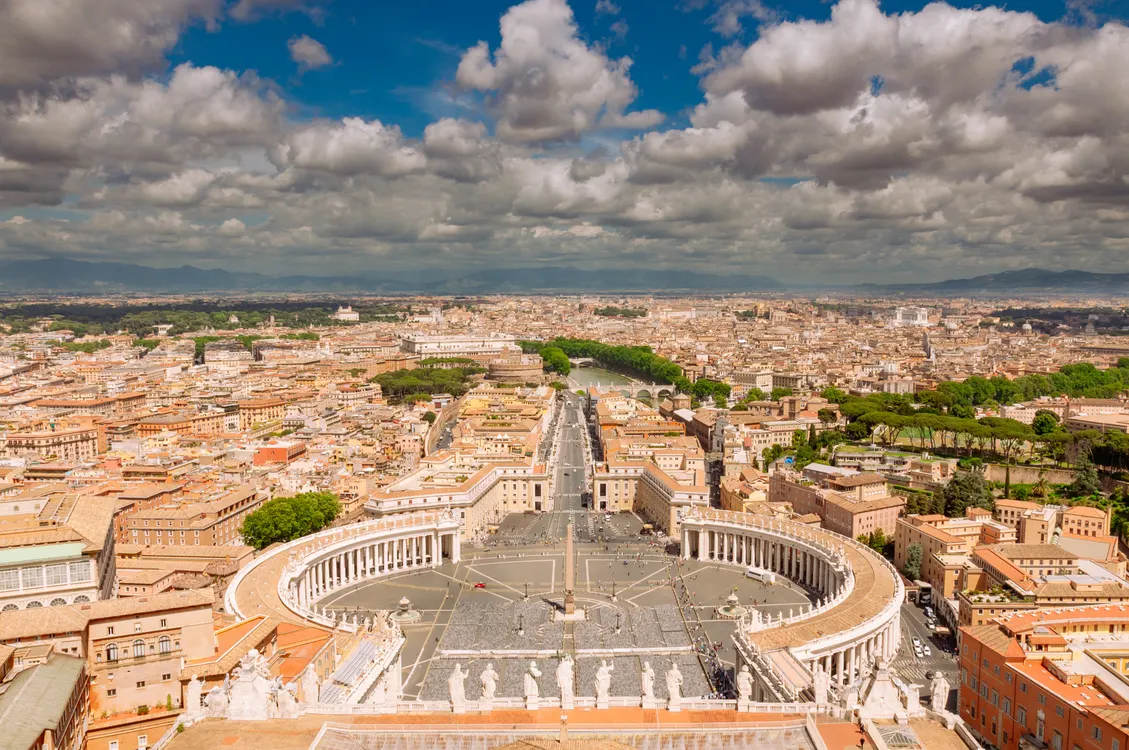
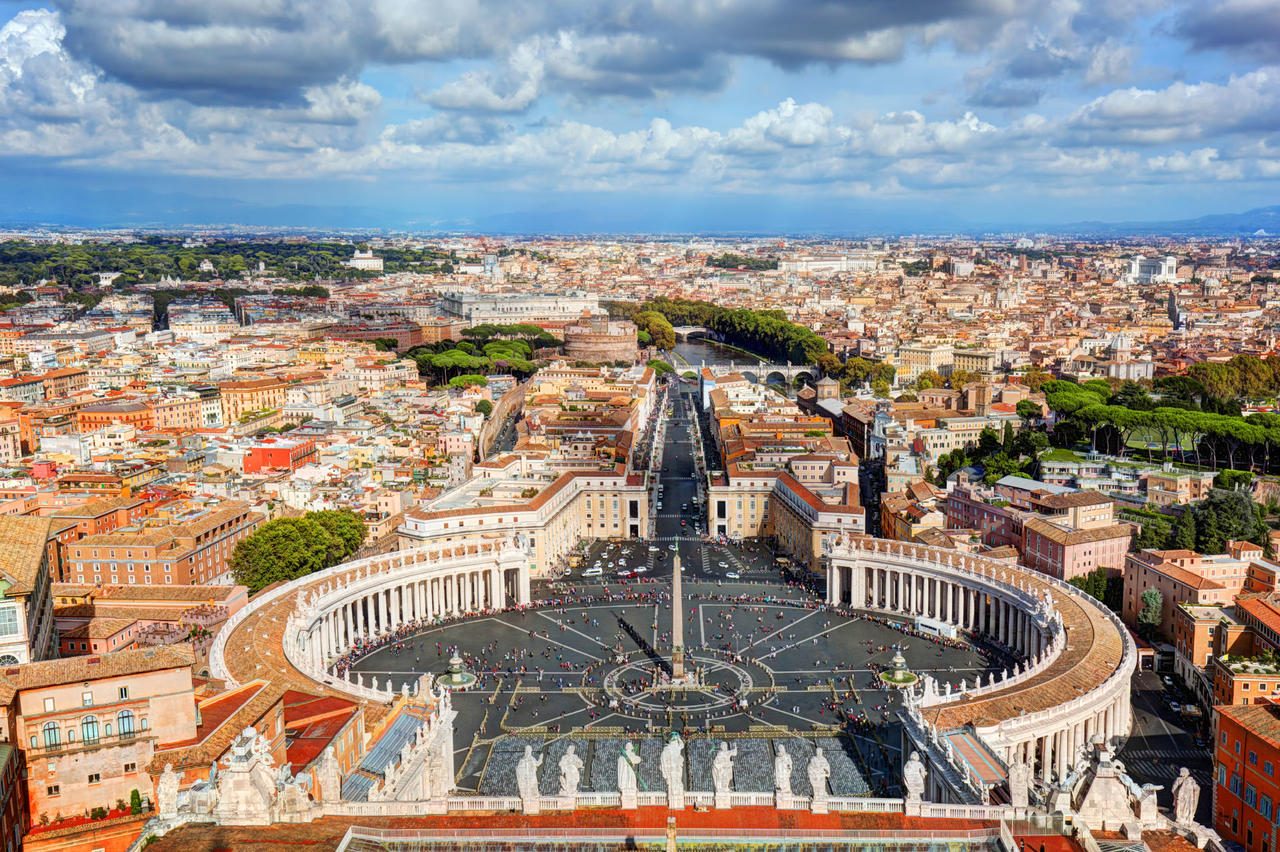
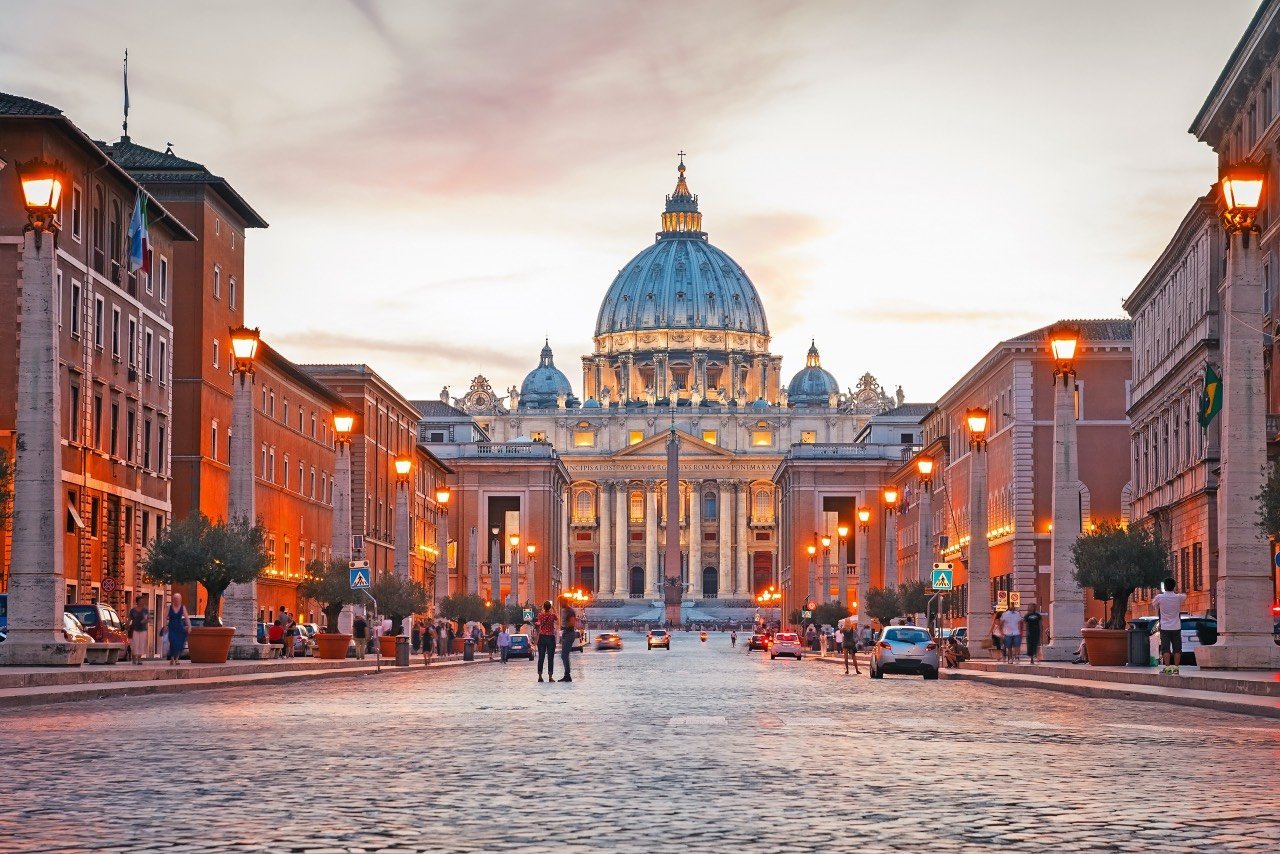
Bernini's colonnaded plaza fronting the basilica, free to enter and open daily with no ticket required.
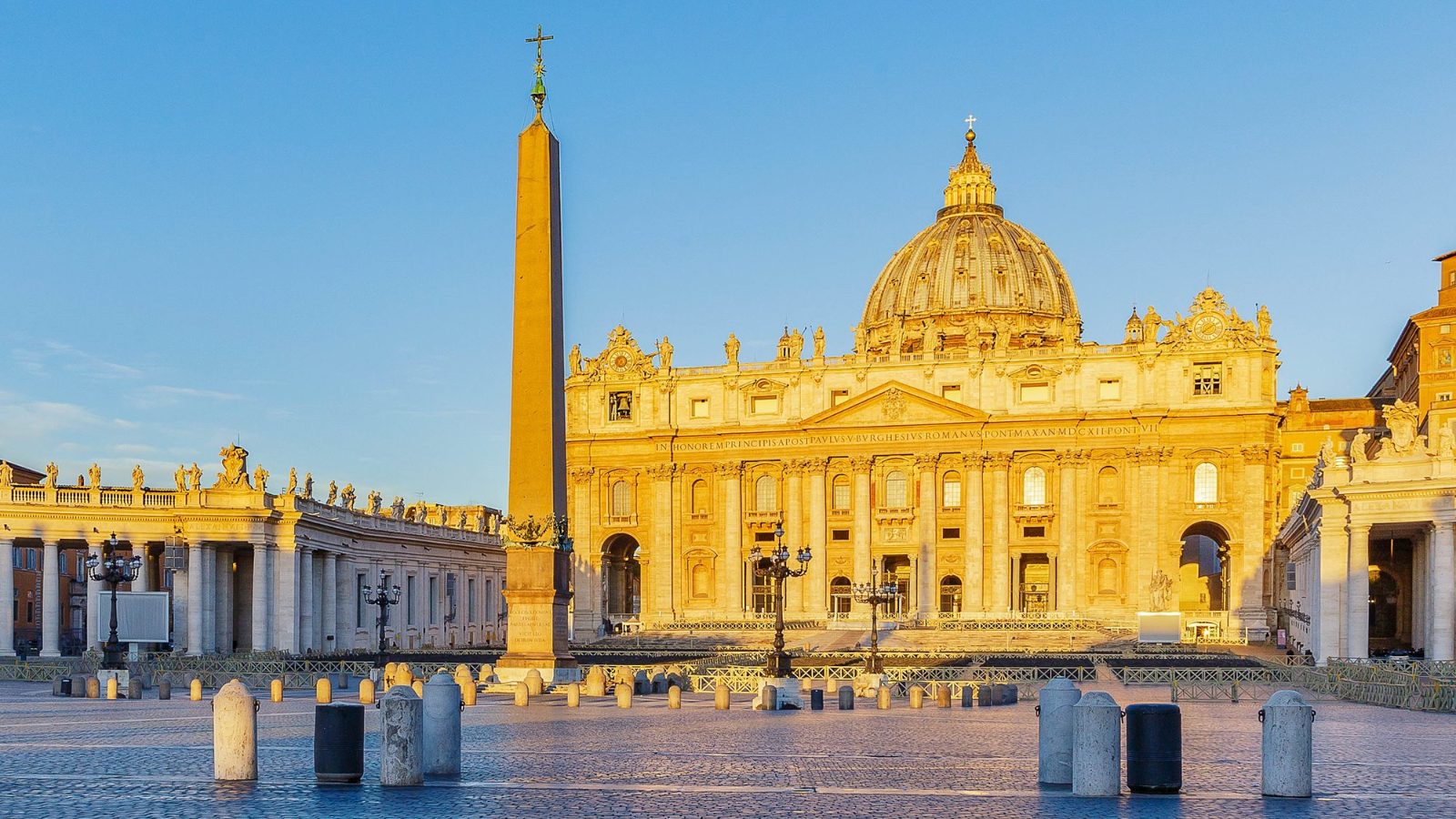
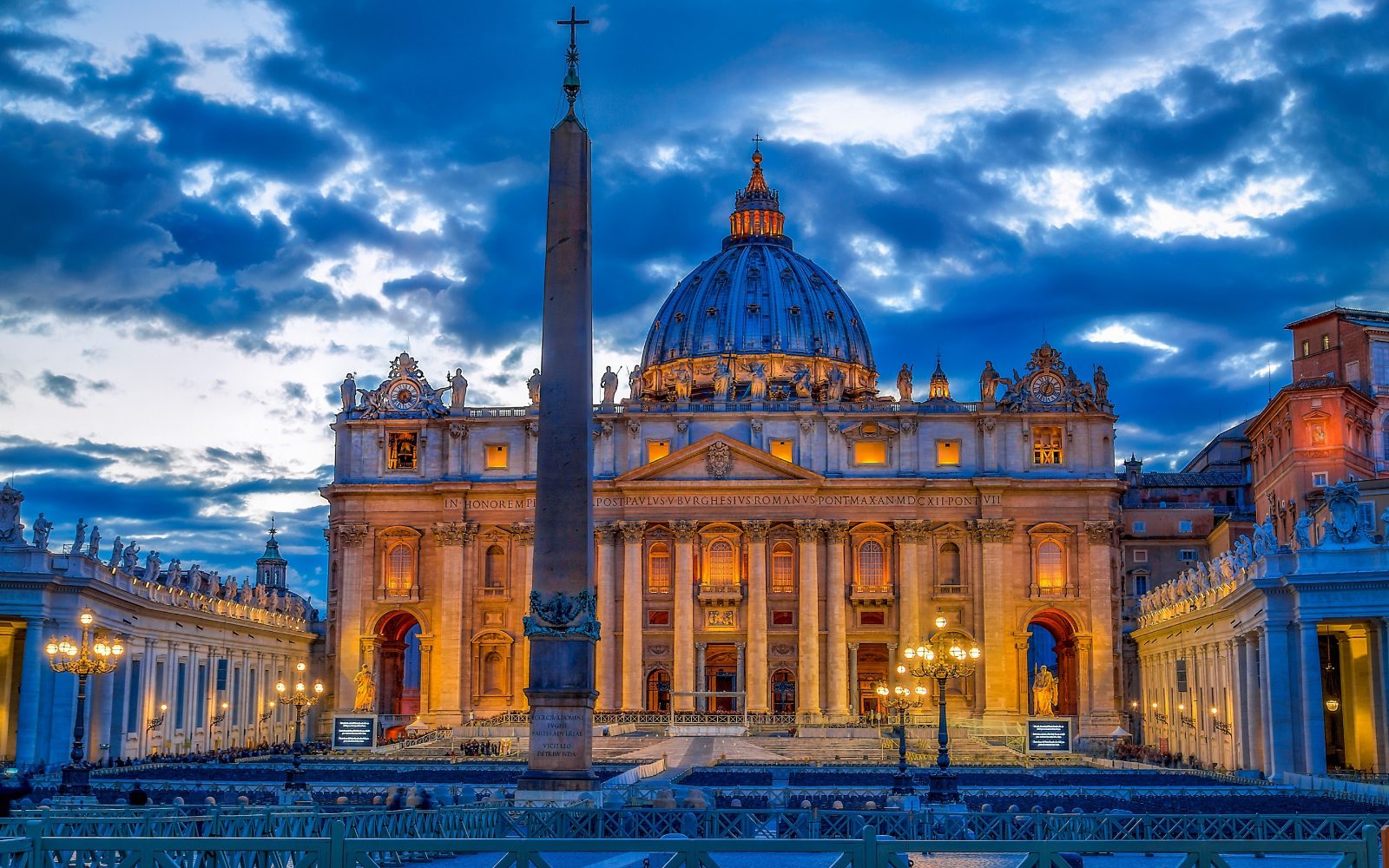
The largest church in Christendom, home to Michelangelo's Pietà and the dome climb, with free entry.
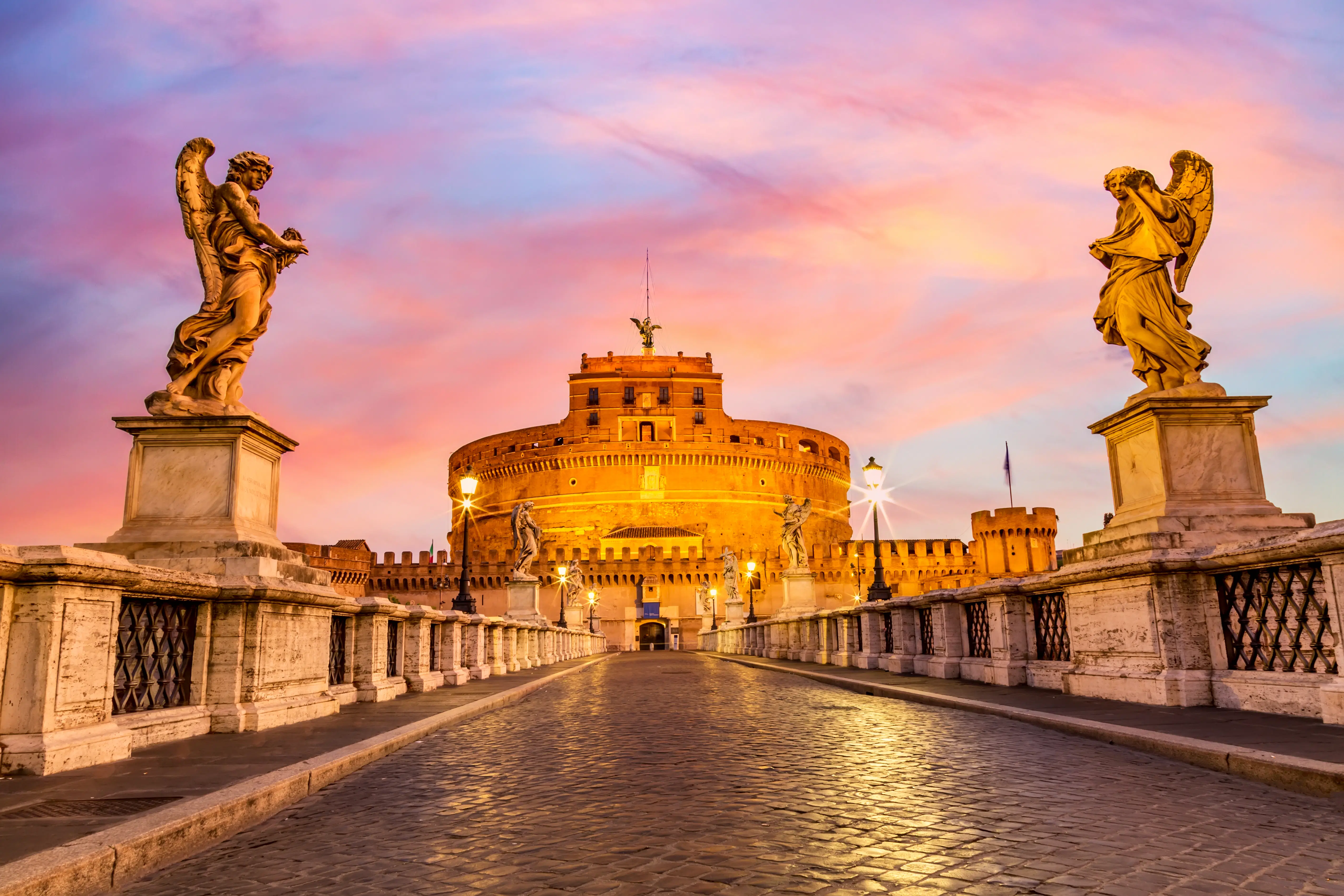
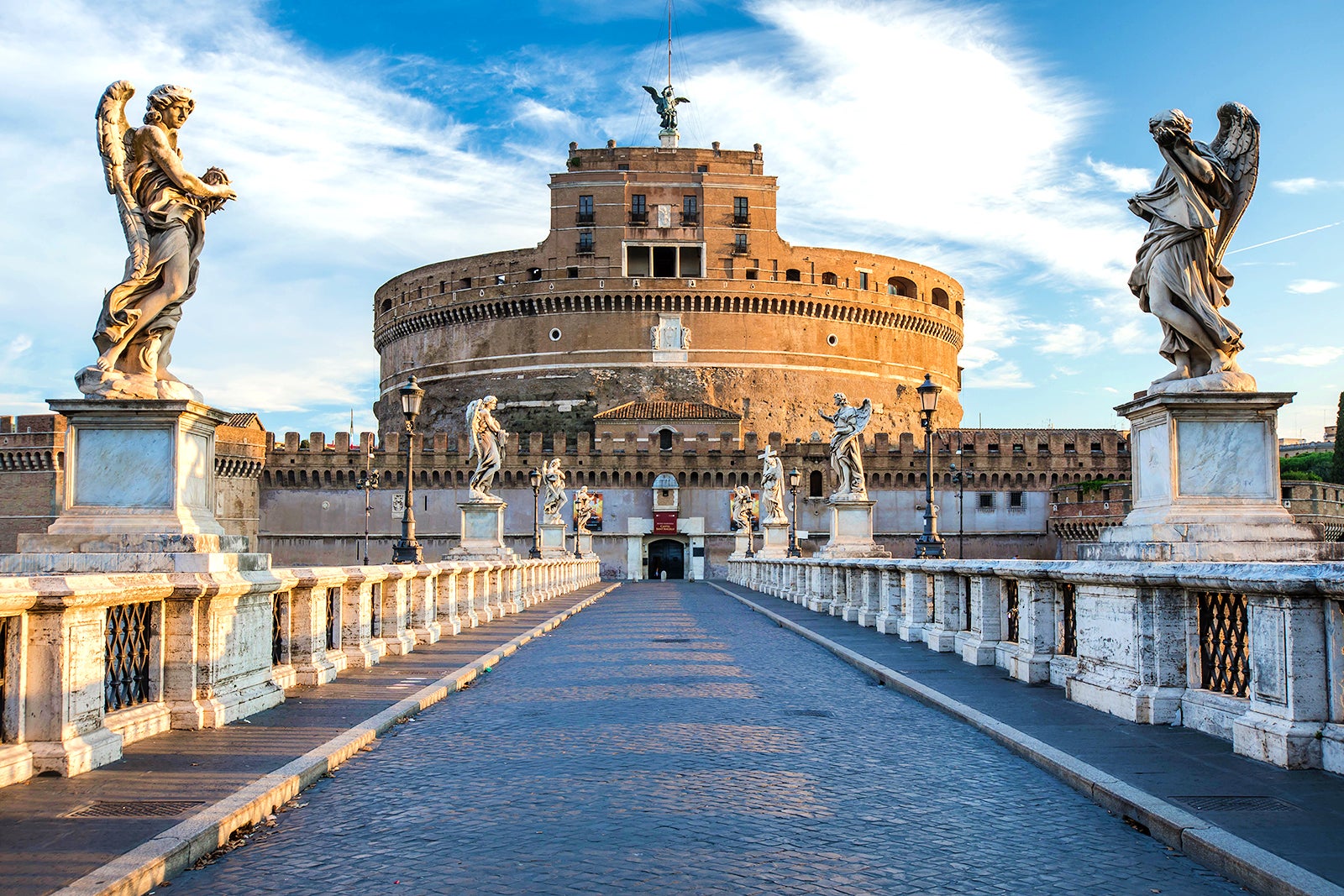
A cylindrical fortress and former papal refuge along the Tiber, now a museum with panoramic terrace views.
The wide boulevard connecting Castel Sant'Angelo to St. Peter's Square, lined with shops and pilgrim hostels.
A pedestrian bridge decorated with Bernini angel statues spanning the Tiber near the castle.
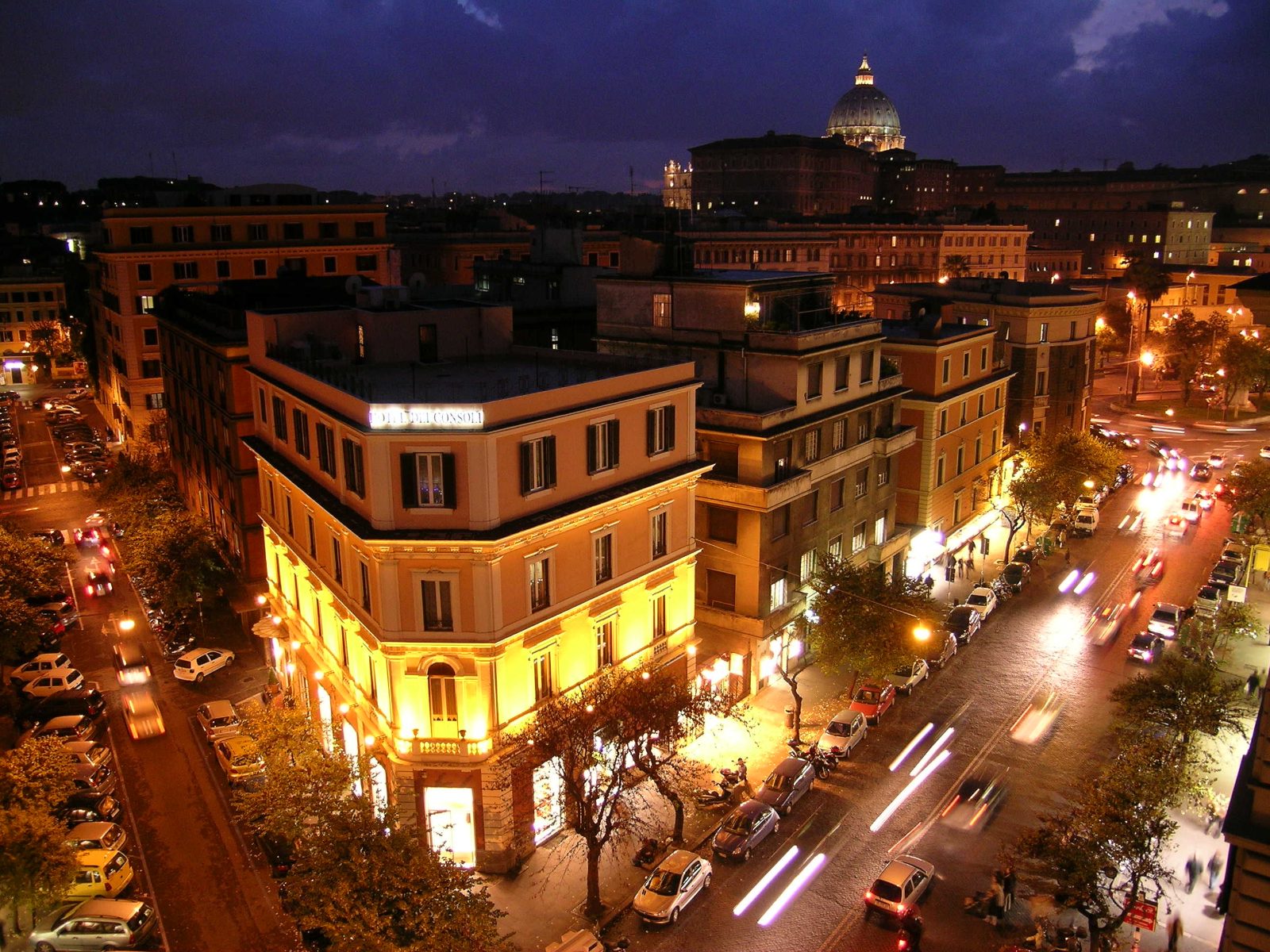
A small hotel on a quiet Prati street with rooftop terrace views toward St. Peter's dome.
Housed in a former convent overlooking St. Peter's Square, with views directly onto the colonnade.
A residential neighborhood with mid-range hotels, cafes and shops just north of Vatican City.
Budget-friendly guesthouses and B&Bs clustered around the Ottaviano metro station.
Join thousands of happy travelers who have discovered this incredible experience
Book Your Experience Now